
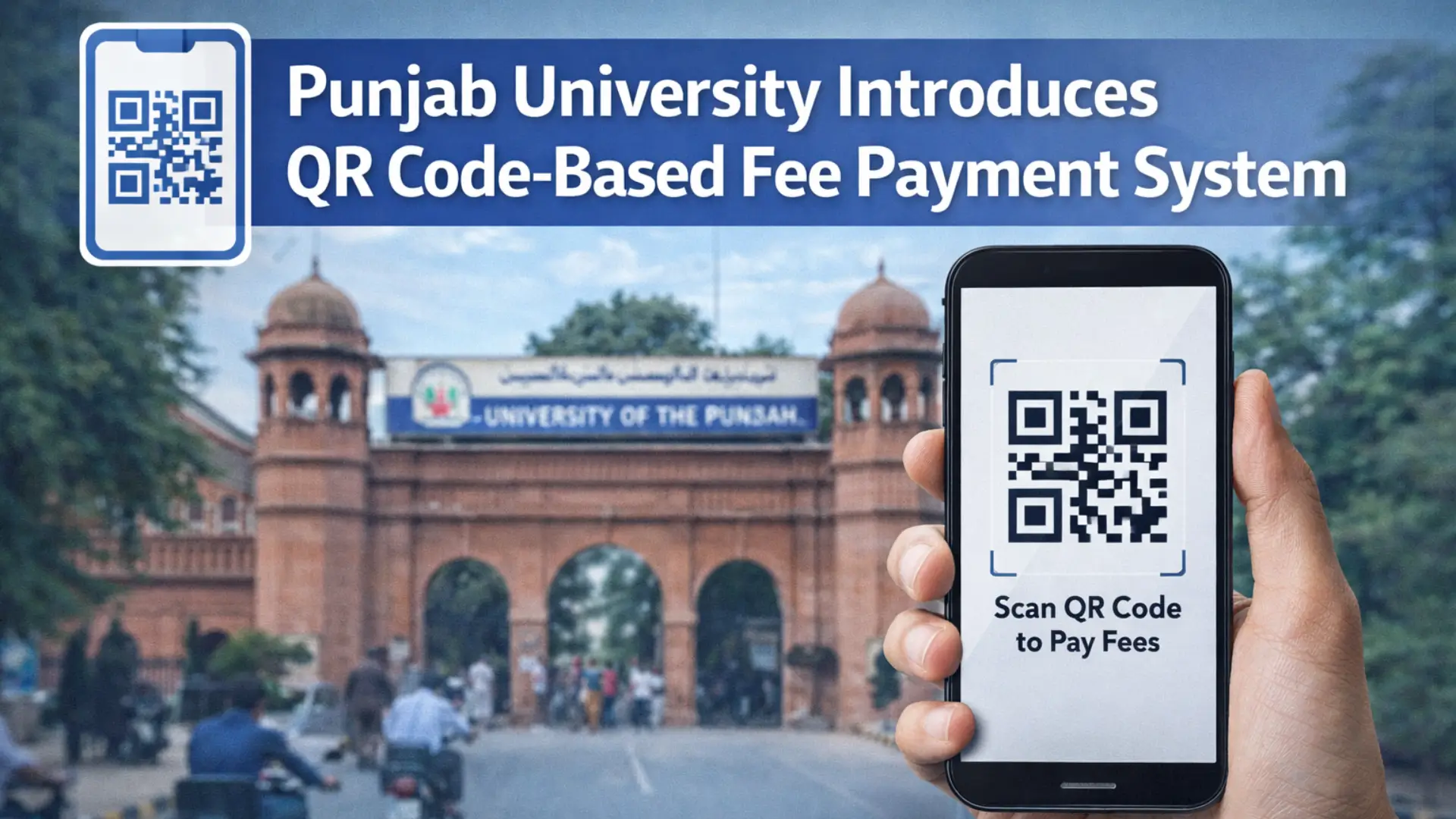

QR Code-Based Fee Payment System. In a major step toward digital transformation, Punjab University (PU) has become the first public sector university in Pakistan to introduce a QR code-based fee payment system. The initiative aims to modernize the university’s financial operations and provide students with a faster, more secure, and convenient way to pay their tuition and other dues.
The new system has been launched following the signing of a Memorandum of Understanding (MoU) between Punjab University and JS Bank, marking a significant milestone in the digitization of university fee transactions.
MoU Signed to Digitize University Fee Challans
The official MoU signing ceremony was held at the Vice Chancellor’s Office at Punjab University. The agreement was formalized by PU Vice Chancellor Muhammad Ali along with senior officials from JS Bank.
Under this agreement, Punjab University will implement Zindigi Raast Dynamic QR, a digital payment solution designed to streamline fee transactions through QR codes. This collaboration reflects the university’s commitment to adopting innovative technologies that enhance operational efficiency and improve the overall student experience.
How the QR Code-Based Fee System Works
With the introduction of Zindigi’s Raast Dynamic QR system, students will now be able to pay their tuition fees and other university charges digitally through mobile banking applications.

Instead of standing in long queues at banks to submit physical challans, students can simply scan the QR code generated on their fee voucher using their mobile banking app. The system processes payments in real time, enabling instant confirmation and reducing delays associated with traditional banking methods.
This digital solution is expected to significantly minimize manual handling of paper-based challans, reduce administrative workload, and ensure greater transparency in financial transactions.
Benefits of the Digital Payment System
The QR code-based payment system offers several key benefits for students, parents, and university administration:
1. Real-Time Payment Processing
Payments made through the Raast Dynamic QR system are processed instantly, eliminating waiting periods and ensuring immediate confirmation.

2. Reduced Paperwork
By digitizing fee challans, the university aims to move toward a paperless system, cutting down on physical documentation and manual record-keeping.
3. Enhanced Transparency
Digital records of transactions help improve accountability and reduce the chances of human error or discrepancies.
4. Convenience for Students and Parents
Students and parents can now make payments from the comfort of their homes using mobile banking apps, saving time and travel costs.
Vice Chancellor Highlights Vision for Modernization
Speaking at the ceremony, Vice Chancellor Prof. Dr. Muhammad Ali emphasized that Punjab University is committed to integrating modern technologies into its administrative framework.

He stated that digitizing fee challans through Raast Dynamic QR will make the payment process faster, more secure, and highly convenient for students and parents. He further noted that this initiative aligns with the university’s broader strategy of modernizing its infrastructure and improving service delivery.
According to him, embracing digital transformation is essential for public sector institutions to remain efficient and competitive in today’s rapidly evolving educational environment.
Move Toward a Cashless and Paperless Campus
The introduction of the QR-based fee system also supports Punjab University’s long-term goal of creating a cashless and paperless campus. By reducing reliance on physical challans and cash transactions, the university aims to streamline financial operations and minimize congestion at bank branches.
The new system is expected to significantly reduce queues at banks during fee submission deadlines, a common challenge faced by students every semester. This change will not only improve convenience but also promote digital financial practices among students.

Role of JS Bank and Raast Compliance
Representatives from JS Bank highlighted that Zindigi’s Raast Dynamic QR is a secure and State Bank-compliant digital payment solution. It enables instant interbank transfers, ensuring that transactions are processed quickly and securely.
The bank officials expressed confidence that this partnership will strengthen the digital infrastructure at Punjab University and promote financial inclusion by encouraging the use of digital banking services.
They further emphasized that the Raast system ensures compliance with national financial regulations, providing a reliable and trustworthy platform for large-scale institutional transactions.
Milestone for Public Sector Universities
Punjab University’s initiative sets a precedent for other public sector universities in Pakistan. As the first public university in the country to adopt QR code-based fee payments, PU is leading the way in digital transformation within the higher education sector.

Experts believe that this step could encourage other universities to follow suit, ultimately contributing to a more digitized and efficient education system nationwide.
Conclusion
The introduction of the QR code-based fee payment system at Punjab University marks a significant advancement in the digitalization of higher education administration in Pakistan. Through its collaboration with JS Bank and the implementation of Zindigi’s Raast Dynamic QR solution, the university aims to simplify fee payments, enhance transparency, and improve convenience for students and parents.