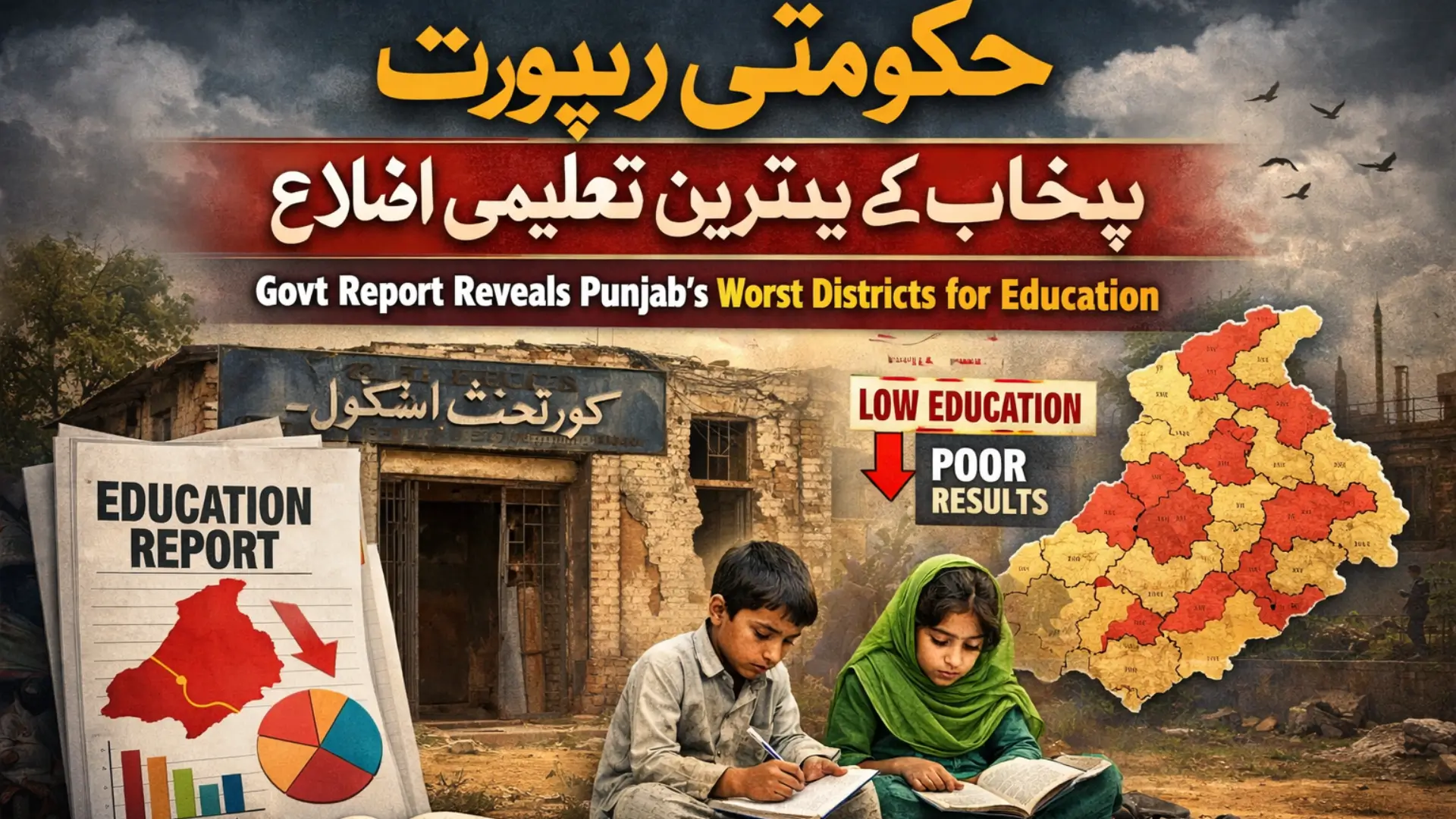

Punjab Worst Districts for Education. A recent government-backed report has revealed alarming disparities in the quality of education across Punjab, highlighting both progress in major cities and serious challenges in several underdeveloped districts. The report was jointly prepared by the Pakistan Bureau of Statistics (PBS) and FAFEN (Free and Fair Election Network), offering a comprehensive assessment of public schools across the province.
The findings have sparked renewed debate about education reforms, infrastructure gaps, and the urgent need for targeted interventions in low-performing districts.
Education Assessment Report
The report evaluated public sector schools across Punjab using more than a dozen indicators related to education quality and basic infrastructure. The aim was to provide a data-driven picture of how schools are performing in different districts and where government attention is most urgently required.
This large-scale assessment is considered one of the most detailed evaluations of Punjab’s public education system in recent years.

Key Indicators Used in the Evaluation
According to officials, the assessment was based on a wide range of education and infrastructure indicators, including:
- Student enrollment rates
- Examination results and academic performance
- Availability of clean drinking water
- Access to electricity
- Condition of school buildings
- Availability of basic facilities and services
These indicators were used to measure not only academic outcomes but also the overall learning environment in public schools.
Rahim Yar Khan Among Lowest-Performing Districts
One of the most concerning findings of the report is the poor performance of Rahim Yar Khan, which ranked among the bottom three districts in Punjab in terms of education quality.

The district showed weak results across multiple indicators, including enrollment, exam performance, and access to essential school facilities. Education experts believe that poverty, lack of infrastructure, and limited government oversight have contributed significantly to the district’s low ranking.
Lowest Literacy Rates Recorded in Southern Punjab
The report further revealed that Rahim Yar Khan also recorded one of the lowest literacy rates in the province, ranking just above Rajanpur and Dera Ghazi Khan, which were identified as the two worst-performing districts in terms of literacy.
Southern Punjab continues to struggle with long-standing education challenges, including teacher shortages, inadequate school facilities, and low student retention rates—particularly at the secondary level.

Performance Gap Between Urban and Rural Districts
The findings clearly highlight a growing education gap between urban and rural districts. While major cities continue to show improvement, many rural and underdeveloped areas remain far behind in both infrastructure and learning outcomes.
Experts warn that without focused reforms, this gap could widen further, limiting opportunities for students in marginalized regions.
Lahore Shows Significant Improvement in Education
In contrast to the poor performance of several southern districts, Lahore emerged as one of the better-performing districts in the report. With education facilities and service availability reaching around 80 percent, Lahore secured the fifth position among all Punjab districts.

Officials credit improved infrastructure, better monitoring, and higher investment in education for Lahore’s strong performance. The availability of basic facilities such as electricity, drinking water, and functional classrooms played a key role in boosting the city’s ranking.
Role of Infrastructure in Education Quality
The report emphasizes that education quality is closely linked to infrastructure availability. Schools lacking basic necessities like clean water and electricity are far less likely to retain students or produce strong academic results.
Districts that performed well generally had better-maintained school buildings, higher teacher attendance, and improved access to learning resources.

Need for Targeted Education Reforms
Government officials say the findings underline the urgent need for district-specific education reforms, especially in low-performing areas such as Rajanpur, Dera Ghazi Khan, and Rahim Yar Khan.
Rather than applying uniform policies across Punjab, experts recommend targeted investment in infrastructure, teacher training, and student support programs to address local challenges more effectively.
Government Response and Future Plans
Authorities have acknowledged the report’s findings and stated that steps are being considered to improve education outcomes in underdeveloped districts. Proposed measures include upgrading school infrastructure, ensuring the availability of basic facilities, and strengthening monitoring mechanisms.
Officials also stress the importance of collaboration between provincial departments, local administrations, and education-focused organizations to achieve sustainable improvements.
Conclusion
The government report by the Pakistan Bureau of Statistics and FAFEN presents a clear picture of Punjab’s uneven education landscape. While cities like Lahore continue to show progress, several districts—particularly in southern Punjab—remain among the worst performers in terms of literacy, infrastructure, and overall school quality.