
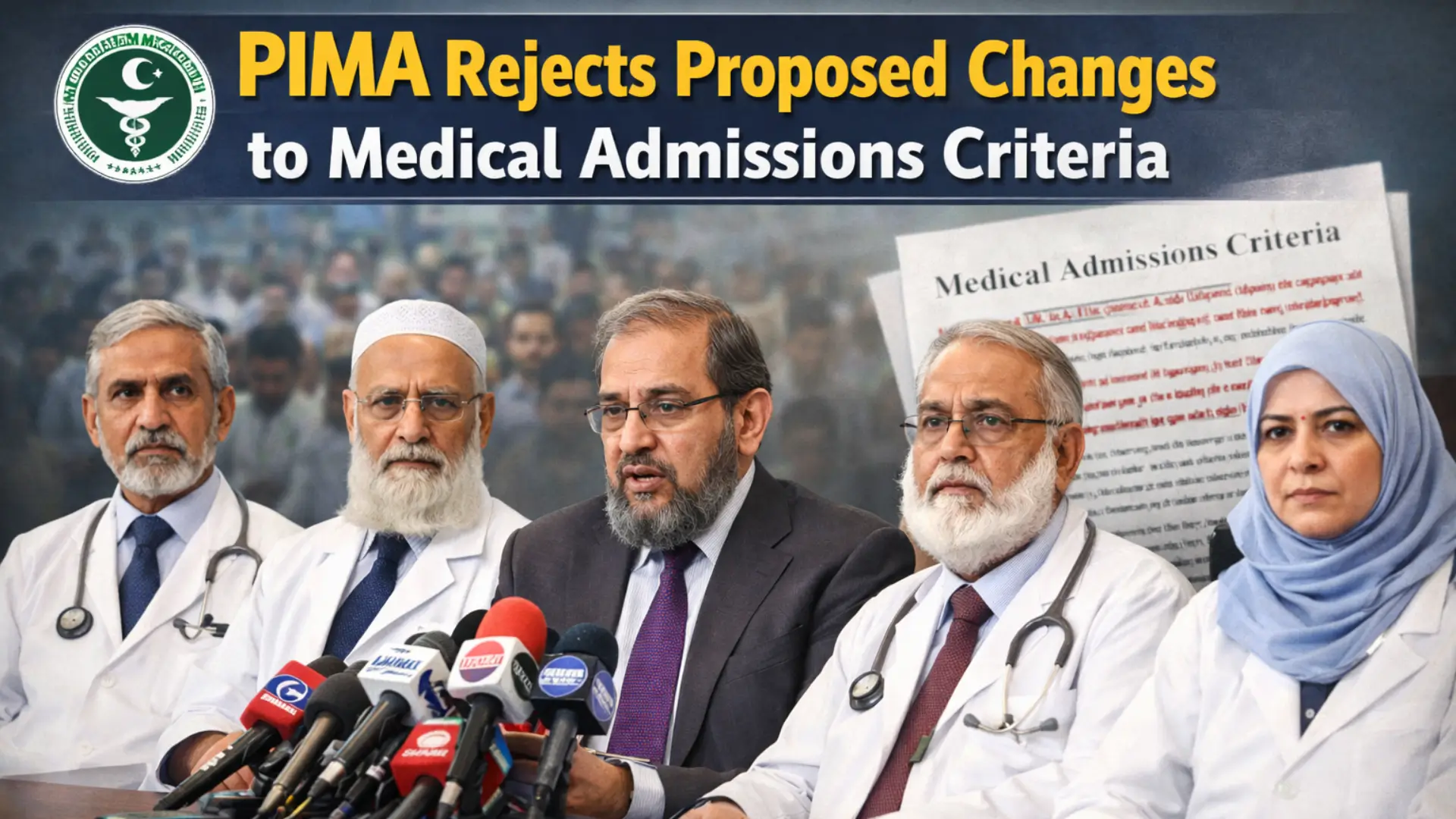

PIMA Rejects Proposed Changes to Medical Admissions Criteria. The Pakistan Islamic Medical Association (PIMA) has strongly rejected the proposed changes to medical and dental college admission criteria, terming the move unacceptable and against the principles of merit and transparency. The association has warned that any unnecessary revisions to the existing admission framework could seriously harm the credibility of medical education in Pakistan.
PIMA has urged the government and relevant authorities to retain the current admission policy, which it says has been functioning effectively and fairly for students across the country.
PIMA Raises Concerns Over Proposed Reforms
In an official statement, PIMA Central President Prof Atif Hafeez Siddiqui expressed serious reservations about altering the existing medical admission criteria. He stated that the proposed changes are contrary to merit-based principles and could undermine the integrity of the current system.
According to Prof Siddiqui, the present admission structure has ensured fairness, transparency, and equal opportunity for students aspiring to enter the medical and dental professions.
Existing MDCAT System Termed Transparent and Merit-Based
Prof Atif Hafeez Siddiqui emphasized that the current MDCAT (Medical and Dental College Admission Test) system is transparent and standardized. He highlighted that a uniform syllabus and examination pattern is followed across the country, ensuring equal treatment for all candidates.
He further noted that no serious objections were raised regarding the conduct of the MDCAT examination, and there have been no reports of corruption, malpractice, or large-scale irregularities. This, he said, proves that the system is functioning efficiently.
Stakeholder Acceptance of Current Admission Policy
PIMA stated that the existing medical admission system has remained acceptable to all key stakeholders, including students, parents, medical institutions, and regulatory bodies.

Prof Siddiqui stressed that since the system has earned widespread acceptance, there is no justification for making sudden changes. He warned that revising admission criteria without consensus could create confusion and mistrust among students and institutions alike.
Warning Against Weakening MDCAT Credibility
The PIMA president cautioned that revising admission criteria at this stage could weaken the credibility of the MDCAT framework. He explained that frequent policy changes not only disrupt academic planning but also raise questions about governance and decision-making in the education sector.
Maintaining consistency in admission policies, he said, is essential to uphold public confidence in medical education systems.

Lowering Merit Standards May Harm Medical Education
PIMA strongly opposed any move to lower merit standards for medical and dental admissions. According to the association, compromising on merit would directly affect academic quality, transparency, and professional training.
Prof Siddiqui warned that admitting students on relaxed criteria could result in poorly trained doctors, ultimately impacting the healthcare system and patient safety across the country.
Impact on Healthcare Sector and Future Doctors
The association highlighted that medical education plays a crucial role in shaping the future healthcare workforce. Any decline in admission standards could lead to long-term consequences, including reduced quality of medical professionals and weakened public trust in healthcare services.

PIMA emphasized that the standard of doctors entering the healthcare system must not be compromised under any circumstances.
PIMA Urges Government to Maintain Current Policy
PIMA has called upon the government to refrain from making unnecessary changes to the existing medical admission policy. The association urged authorities to safeguard the current system, which it says is working effectively and fairly.
The organization also stressed that policy decisions should be based on evidence, stakeholder consultation, and national interest rather than short-term considerations.

Decisions Should Be Made in National Interest
The Pakistan Islamic Medical Association emphasized that any decision regarding medical and dental admissions should be taken solely in the national interest. Preserving merit, transparency, and high academic standards is essential to maintain the quality of healthcare education in Pakistan.
PIMA reiterated its commitment to supporting reforms that genuinely improve medical education but made it clear that unwarranted changes that weaken standards will not be supported.
Conclusion
PIMA’s rejection of the proposed changes to medical admissions criteria highlights growing concerns over maintaining merit, transparency, and academic excellence in Pakistan’s medical education system. With the MDCAT framework already considered fair and standardized, the association believes that altering the criteria could do more harm than good.