
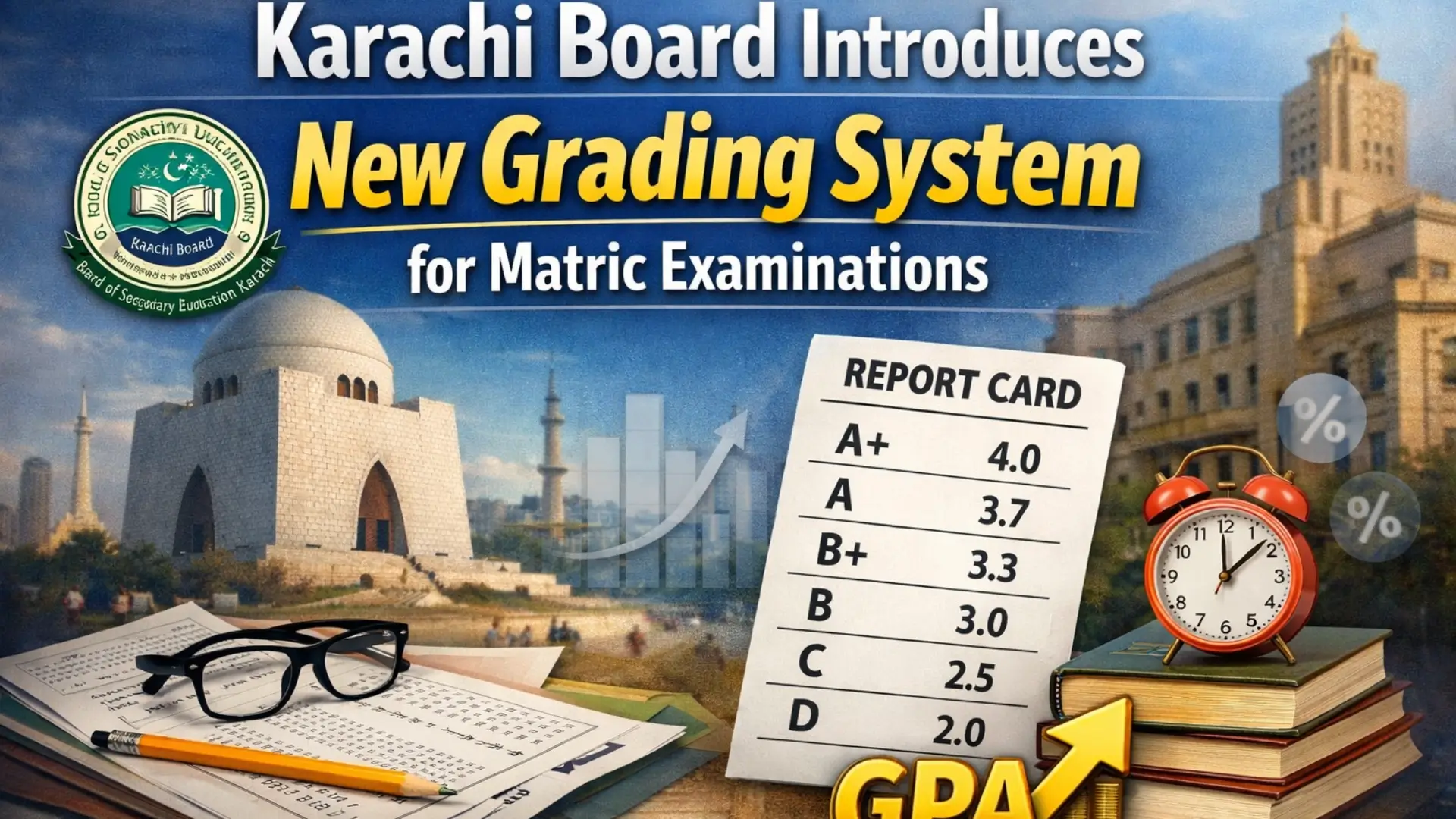

Karachi Board Introduces New Grading System. The Board of Secondary Education Karachi (BSEK) has officially introduced a new grading system for matriculation examinations, marking a major reform in the assessment process for secondary school students. This step is being seen as a significant move toward modernizing the education system and reducing unnecessary academic pressure on students.
According to the Karachi Board, the newly approved grading structure will be implemented in phases, ensuring a smooth transition for students, teachers, and educational institutions across the city.
Implementation Timeline of the New Grading Policy
As per the official announcement, the new grading system will be applied to Class 9 students from the ongoing academic year. However, Class 10 students will continue under the existing system until 2027, after which they will also be assessed according to the revised grading structure.
This phased implementation strategy aims to give schools and students enough time to adapt to the new evaluation criteria and teaching methodologies aligned with the updated grading framework.

Minimum Passing Marks Set at 40 Percent
One of the most important changes under the new system is the fixation of minimum passing marks at 40 percent. The Karachi Board has clarified that students must secure at least 40 percent marks in each subject to be declared successful.
This decision has been taken to ensure that students achieve a basic level of understanding and competency before being promoted to the next academic level.
Introduction of “U Grade” Instead of Fail Status
In a major shift from traditional practices, the Karachi Board has eliminated the conventional “fail” label. Students who score below 40 percent will now be placed under a newly introduced “U grade” category.

Education experts believe that replacing the word “fail” with the U grade will help reduce psychological stress, stigma, and demotivation among students. The board aims to promote a more supportive and encouraging learning environment rather than one based on fear of failure.
New Grade Structure Explained
Under the revised grading system, students’ performance will be categorized into multiple grades based on their obtained marks. Notably, students scoring between 96 and 100 percent will be awarded the highest A++ grade, recognizing exceptional academic achievement.
Only students who secure 40 percent or above will be considered successful, while those falling below the threshold will receive a U grade and will not be promoted automatically.

This structured grading approach is expected to provide greater clarity and transparency in student evaluation.
Interim Introduction of GPA System
Alongside the grading reform, the Karachi Board has also announced the interim introduction of a GPA (Grade Point Average) system. This move is intended to gradually align the matric examination framework with national and international education standards.
The GPA system will offer a more comprehensive overview of a student’s academic performance, rather than focusing solely on marks. Education authorities believe this change will help students better prepare for higher education systems where GPA-based evaluations are commonly used.

Supplementary Examinations for Unsuccessful Students
Students who fail to meet the minimum passing criteria under the new grading system will be required to appear in supplementary examinations. The board has emphasized that supplementary exams will provide students with another opportunity to improve their performance without losing an academic year.
This policy reflects the board’s commitment to student support and academic continuity, ensuring that one poor performance does not permanently hinder a student’s educational progress.
Objectives Behind the New Grading System
The Karachi Board has stated that the primary objective of introducing this new grading system is to enhance the quality of education, reduce unhealthy competition, and encourage conceptual learning rather than rote memorization.

By shifting focus from failure labels to performance-based grades, the board aims to foster confidence, motivation, and long-term academic growth among students.
Reaction from Education Experts and Parents
Education experts have largely welcomed the new grading policy, calling it a positive step toward educational reform. Many believe that the introduction of GPA and the removal of the fail status will help create a healthier academic environment.
Parents have also expressed cautious optimism, hoping that the new system will reduce exam stress and allow students to focus more on learning instead of marks alone.
Conclusion
The introduction of the new grading system by the Board of Secondary Education Karachi represents a major transformation in matric examination assessment. With phased implementation, a 40 percent passing threshold, the replacement of fail status with U grade, and the interim GPA system, the reforms aim to modernize education while prioritizing student well-being.