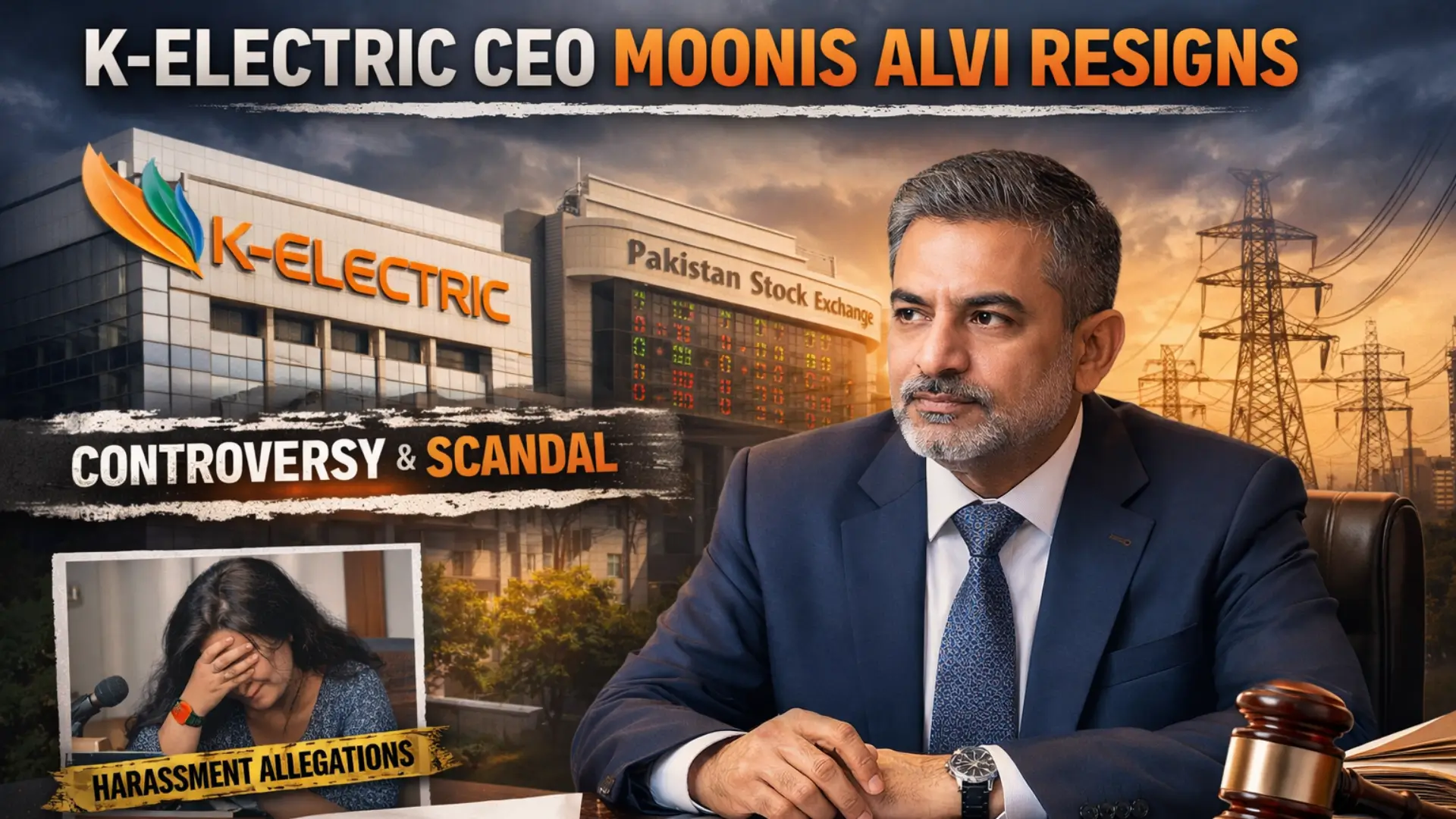

K-Electric has formally confirmed that its Chief Executive Officer, Syed Moonis Abdullah Alvi, has resigned from his position. The development was disclosed through a material information filing submitted to the Pakistan Stock Exchange and the regulator on February 6, 2026.
The resignation comes after months of controversy surrounding harassment allegations made by a former senior employee of the power utility. While the company has not publicly linked the resignation to the case, the timing has drawn strong public and corporate attention, especially given Alvi’s long association with K-Electric and his prominent public role.
Official Disclosure to the Market
In its filing to the stock exchange, K-Electric confirmed that Alvi had tendered his resignation as CEO. However, the company did not provide detailed reasons behind the decision, nor did it outline an immediate transition or succession plan.
Such disclosures are standard practice for listed companies in Pakistan. Any change in top leadership is considered material information and must be shared with investors and regulators to ensure transparency and market stability.
Background of the Allegations
The controversy traces back to allegations raised by K-Electric’s former chief marketing and communications officer. She accused Alvi and others of harassment, intimidation, mental agony, threats, and creating a hostile work environment.
According to reports, Alvi had been under significant mental stress for several months following these accusations. The case sparked debate across corporate, legal, and social circles, highlighting broader concerns around workplace conduct, internal accountability, and complaint-handling mechanisms in large organizations.

Alvi consistently denied all allegations and maintained that the claims were unfounded.
Inquiry by Sindh High Oversight Authority
The matter was taken up by the Sindh High Oversight Authority, headed by retired Justice Shah Nawaz Tariq. After reviewing the case, the authority initially ordered Alvi’s removal from his position and imposed a fine of Rs. 2.5 million.
The decision marked a rare instance of a sitting CEO of a major utility facing such regulatory action. It also intensified media scrutiny and public debate around due process and evidence standards in harassment-related cases.
Alvi responded by rejecting the findings and announced his intention to challenge the decision through legal channels.
Governor’s Intervention and Reversal
A major turn in the case came when Sindh Governor Kamran Tessori overturned the provincial order on July 31, 2025. The governor stated that key evidence had been ignored during the earlier proceedings.

According to the governor’s order, the complainant had not submitted a formal written complaint to K-Electric’s relevant internal committee or to any other authorized body. The order further noted that the chat records presented as evidence did not substantiate several of the serious allegations made against Alvi.
This reversal shifted the legal and public narrative of the case, raising questions about procedural lapses and the handling of internal grievances.
Conflicting Claims From Both Sides
The governor’s order also highlighted sharply conflicting versions of events from both parties.
Alvi maintained that the employee was asked to resign by the company’s HR committee due to poor performance. On the other hand, the complainant asserted that her removal was directly linked to her harassment claims and retaliation for raising concerns.
These opposing narratives underscore the complexity of workplace disputes, especially when senior leadership and reputational stakes are involved.

Moonis Alvi’s Career at K-Electric
Syed Moonis Abdullah Alvi joined K-Electric in 2008 and steadily rose through the organization. Over the years, he held several senior roles, including Chief Financial Officer, Company Secretary, and Head of Treasury.
He was appointed CEO in 2018, a period when the utility was navigating regulatory challenges, infrastructure investment needs, and public criticism over power supply issues in Karachi.
During his tenure, Alvi became one of the most visible faces of the company, frequently representing K-Electric in public forums, media briefings, and policy discussions.
Corporate Initiatives and Public Profile
As CEO, Alvi led multiple corporate initiatives aimed at improving the company’s public image and community engagement. One of the most widely recognized initiatives was the Roshani Baji programme, which focused on women empowerment and social inclusion.
Supporters credit him with strengthening corporate governance structures and improving financial discipline within the organization. Critics, however, argue that persistent service delivery challenges and internal culture issues remained unresolved.

Silence on Transition Plan
In its official filing, K-Electric did not disclose further details about the reasons for Alvi’s resignation or the company’s immediate leadership transition plan.
The absence of a clear roadmap has sparked speculation among investors and analysts. Leadership continuity is considered critical for a utility that serves millions of consumers and operates under close regulatory oversight.
Market participants will be watching closely for announcements regarding an interim CEO or permanent successor, as well as any strategic shifts under new leadership.
Impact on K-Electric and the Power Sector
The resignation comes at a sensitive time for Pakistan’s power sector, which continues to face challenges related to tariffs, fuel costs, regulatory reforms, and consumer trust.
For K-Electric, leadership stability is especially important given its unique position as Karachi’s primary power supplier. Any prolonged uncertainty at the top could affect investor confidence, regulatory engagement, and long-term planning.

At the same time, the episode has reignited discussions about workplace accountability, governance standards, and the balance between protecting complainants and ensuring due process.
Broader Implications for Corporate Pakistan
Beyond K-Electric, the case is being closely followed across corporate Pakistan. It highlights the need for robust internal complaint mechanisms, transparent investigations, and clear communication during crises.
Experts say organizations must strengthen HR processes, ensure independent oversight, and create safe environments for employees to raise concerns without fear of retaliation, while also safeguarding against unverified claims.
What Happens Next
With Alvi’s departure now official, attention shifts to K-Electric’s board and its next steps. Investors, regulators, and consumers will expect clarity on leadership succession, operational continuity, and governance reforms.
The company’s future direction under new leadership may also influence how it addresses public trust, employee relations, and long-standing service challenges in Karachi.
Conclusion
Moonis Alvi’s resignation marks a significant moment for K-Electric and Pakistan’s corporate sector. While legal controversies remain contested, the leadership change underscores the importance of transparency, due process, and strong governance. How K-Electric navigates this transition will shape its credibility and stability in the years ahead.