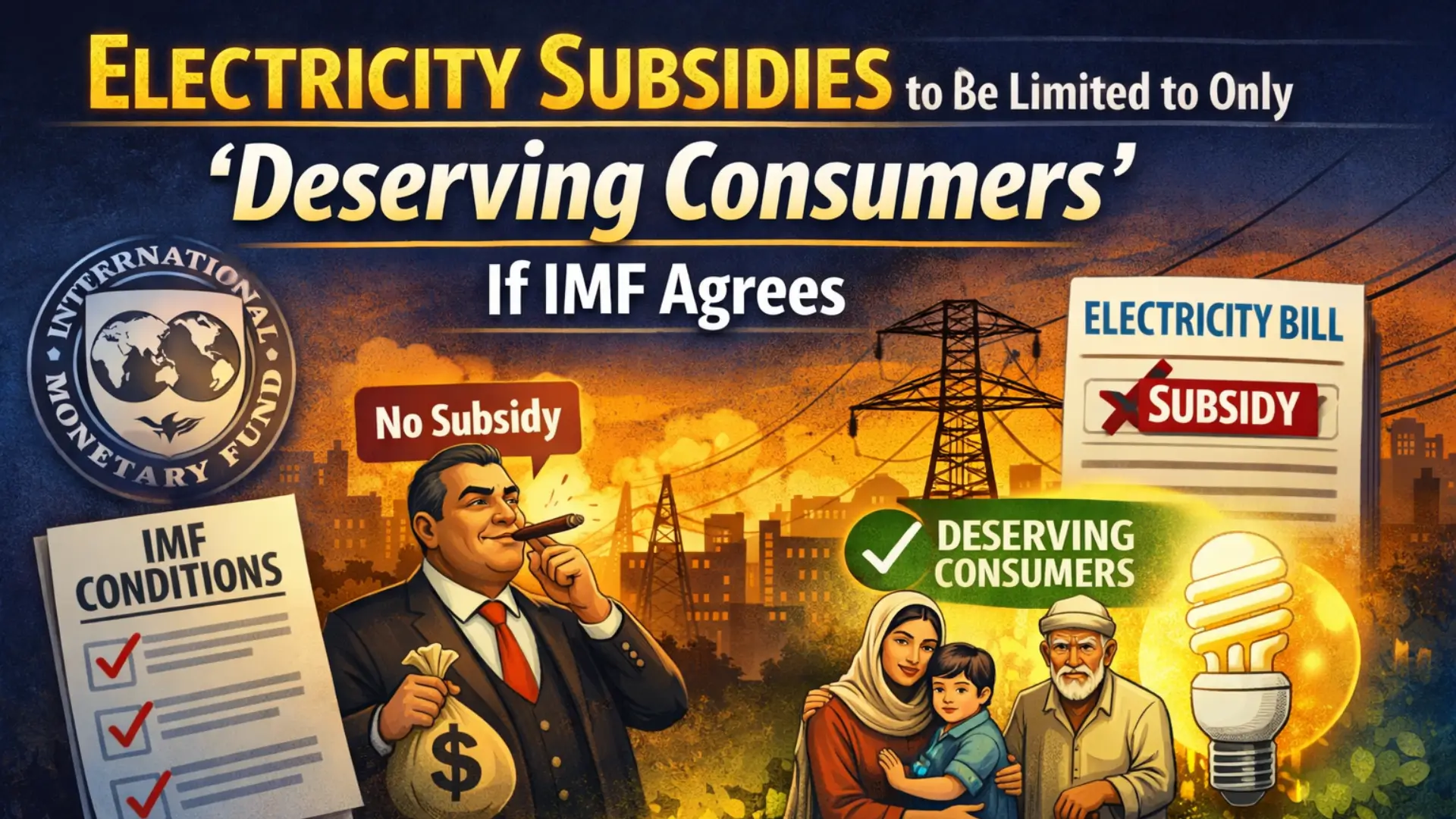

Electricity Subsidies to Be Limited. The Government of Pakistan is preparing a major reform in its energy subsidy policy, under which electricity subsidies will be provided only to deserving consumers. The proposed plan is expected to be discussed with the International Monetary Fund (IMF) during upcoming negotiations focused on fiscal reforms and energy sector restructuring.
According to officials, the new policy aims to make subsidy distribution more targeted and transparent, ensuring that only low-income households benefit from financial support.
Subsidies to Be Linked with BISP Database
Under the proposed framework, electricity subsidies will be provided only to eligible households identified through the Benazir Income Support Programme (BISP). The government plans to use BISP data to determine eligibility based on monthly income levels and socio-economic indicators.
This targeted approach will replace the current blanket subsidy model, where a large number of consumers benefit regardless of their financial status. Authorities believe that linking subsidies with BISP will help ensure that assistance reaches the most vulnerable segments of society.

Consumers to Pay Full Cost of Electricity
A key component of the plan is that most electricity consumers will be charged the full cost of power generation and supply. Instead of applying subsidies across the board, the government intends to limit financial support only to households that qualify under the BISP eligibility criteria.
This shift is expected to improve transparency in electricity pricing and reduce distortions in the energy market caused by widespread subsidies.
End of Cross-Subsidy Mechanism
The government is also planning to eliminate cross-subsidies in the power sector, which currently shift financial burdens between consumer categories. In the existing system, higher-paying consumers often indirectly subsidize lower-paying segments, including domestic users and certain industries.

Under the new policy, authorities aim to ensure that no additional financial burden is placed on other consumers or sectors. Instead, subsidies will be funded directly from the federal budget and limited to pre-approved allocations.
This move is expected to create a more balanced and sustainable electricity pricing structure.
Proposal to Be Presented to IMF
Officials have confirmed that the new electricity subsidy framework will be presented to the IMF delegation during upcoming policy discussions. The proposal will be shared alongside recent tariff restructuring measures, which are part of Pakistan’s broader commitment to economic reforms.

The government hopes that the targeted subsidy model will strengthen its case for continued IMF support, as it aligns with the lender’s emphasis on fiscal discipline and structural reforms.
Broader Energy Sector Reforms Underway
The proposed electricity subsidy changes are part of a wider effort by the government to reform Pakistan’s energy sector and improve fiscal sustainability. Rising circular debt, high energy import costs, and inefficiencies in subsidy distribution have long been major challenges for policymakers.
By narrowing subsidy coverage and improving targeting, authorities aim to reduce fiscal pressure while maintaining social protection for low-income households.

Similar Reforms Planned in Gas Sector
In addition to electricity, the government is also planning reforms in the natural gas sector. The Petroleum Division is reportedly working on a plan to gradually phase out cross-subsidies in gas pricing as well.
Currently, cross-subsidies in the gas sector are estimated at around Rs. 225 billion, placing a significant burden on the national exchequer. Under the new approach, any future subsidies are expected to be clearly incorporated into the federal budget framework, ensuring better financial accountability.
Data Integration with BISP Already Underway
Authorities have already begun coordinating with BISP to collect and integrate consumer data required for implementing the targeted subsidy model. This includes identifying eligible households, linking utility records, and verifying income thresholds.

Experts believe that data-driven targeting will play a crucial role in ensuring the success of the new subsidy framework. However, they also stress the importance of transparency and effective implementation to avoid exclusion errors.
Potential Impact on Consumers
If approved, the new policy could significantly impact electricity consumers across Pakistan. While low-income households are expected to continue receiving financial support, middle- and high-income consumers may face higher electricity bills due to reduced subsidies.
On the other hand, the government argues that the reform will create a fairer and more efficient system, where subsidies are distributed based on genuine need rather than universal coverage.
Conclusion
The government’s plan to limit electricity subsidies to deserving consumers marks a major shift in Pakistan’s energy policy. By linking subsidies with BISP data, eliminating cross-subsidies, and aligning reforms with IMF recommendations, authorities aim to create a more targeted and financially sustainable system.