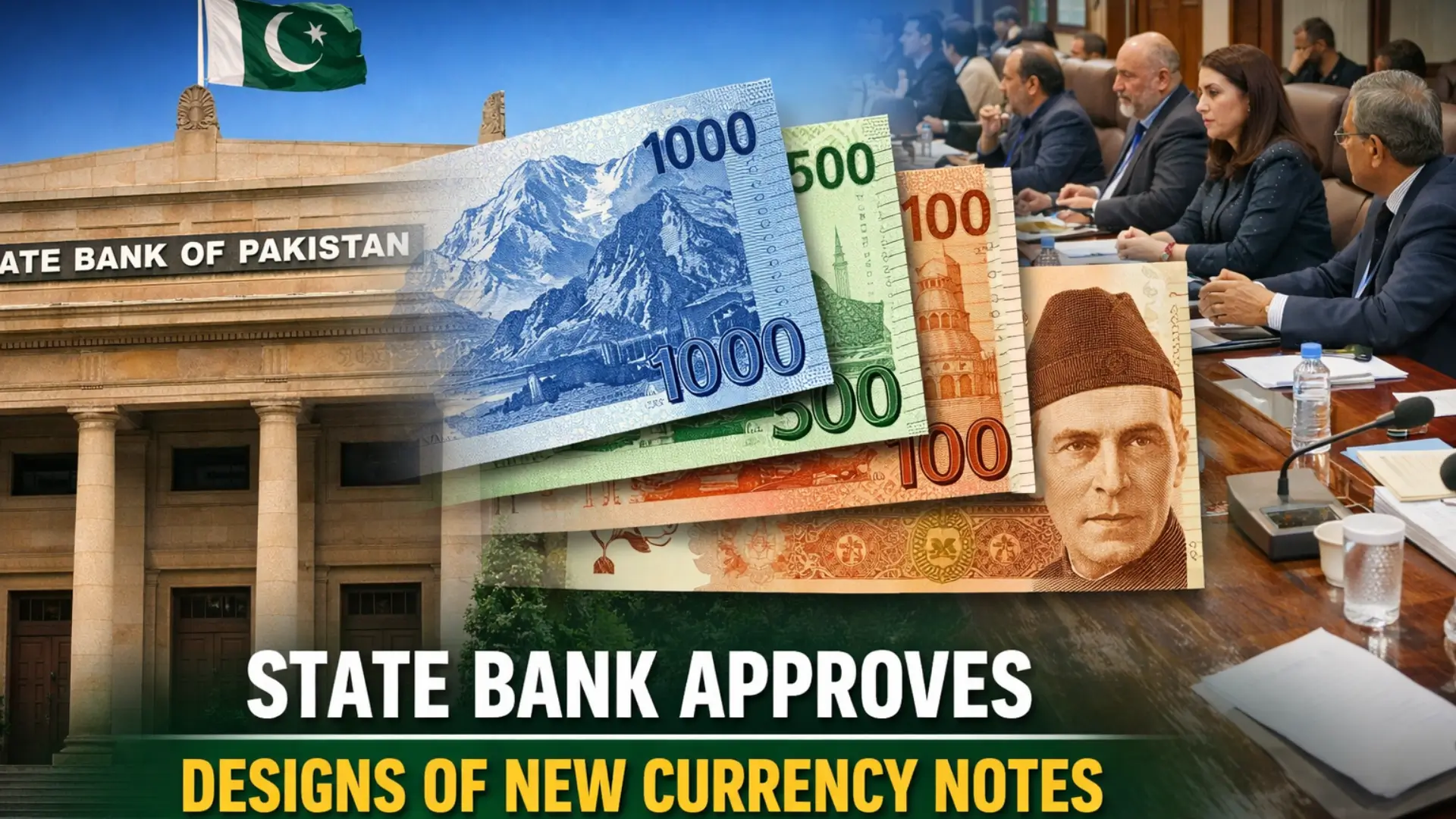

Approves Designs of New Currency Notes. Pakistan is moving closer to introducing newly designed currency notes. The Governor of the State Bank of Pakistan has officially confirmed that the designs for the new banknotes are complete. This announcement has sparked public interest, especially amid ongoing economic pressure and debates around taxation.
The update was shared during a meeting of the Senate Standing Committee on Finance, where several key financial and tax-related issues were discussed. Alongside the currency update, senators also raised serious concerns about the super tax and the role of the Federal Board of Revenue.
New Currency Note Designs Finalized
Governor Jameel Ahmad informed the committee that the State Bank Board has approved the designs of the new currency notes. After internal approval, the designs were sent to the Ministry of Finance for the next step.
However, he made it clear that the new notes will only be issued after final approval from the federal government. Until that approval is granted, printing and circulation will not begin.
This clarification is important because many people were expecting new notes to enter the market soon. The governor’s statement confirms that while technical work is done, the final decision now rests with the government.
No Plan to Discontinue Rs. 5,000 Note
One major concern among the public has been the future of the Rs. 5,000 currency note. There have been rumors that the high-value note might be discontinued as part of economic reforms.
Addressing this directly, the SBP governor told the committee that there is no proposal under consideration to discontinue the Rs. 5,000 note. This statement brought relief to businesses and individuals who rely heavily on higher-denomination notes for large transactions.

By clearing this confusion, the State Bank aimed to stop unnecessary panic in the market.
Discussion at Senate Standing Committee on Finance
The update on currency notes was shared during a meeting of the Senate Standing Committee on Finance, where lawmakers reviewed multiple financial challenges facing the country.
The meeting turned intense when senators shifted focus toward taxation, especially the super tax imposed on certain individuals and businesses.
Senator Abdul Qadir Raises Super Tax Concerns
Senator Abdul Qadir strongly criticized the current super tax policy. He questioned how people are expected to pay a tax covering three to four previous years in one go.
He warned that such pressure could push businesses and skilled individuals to leave Pakistan. According to him, forcing large lump-sum payments damages trust and discourages economic activity.
He also accused the Federal Board of Revenue of harassment through aggressive recovery methods.

Proposal for Tax Instalments
Instead of demanding full payment at once, Senator Abdul Qadir suggested that the super tax should be collected in instalments. He proposed spreading payments over two to three years to reduce pressure on taxpayers.
This approach, he argued, would improve compliance and reduce fear among businesses. Many experts believe that flexible tax policies can help stabilize revenue without harming economic growth.
Sherry Rehman Criticizes Repeated Taxation
Senator Sherry Rehman also voiced concerns during the meeting. She reminded the committee that the constitutional court had already ruled that the authority to impose a super tax lies with parliament.
However, she emphasized that legality does not always mean sustainability. According to her, repeatedly taxing the same segment of society is not a long-term solution.
She warned that such policies increase financial stress and widen economic inequality.
Unsustainable Revenue Model Warning
Sherry Rehman further explained that relying on the same taxpayers again and again weakens the economy. Instead of broadening the tax base, this strategy exhausts existing contributors.

She urged policymakers to focus on structural reforms and fair distribution of tax responsibility rather than short-term revenue gains.
FBR Responds to Criticism
Responding to the criticism, the Chairman of FBR told the committee that the department is open to allowing instalments for super tax in certain cases.
This statement signaled a possible softening of the tax collection approach. While no formal policy has been announced yet, the willingness to consider instalments was seen as a positive step.
Super Tax Collection Reaches Rs. 217 Billion
During the meeting, the FBR chairman disclosed that total super tax collection has reached Rs. 217 billion so far.
This figure highlights the significant role of super tax in government revenue. However, lawmakers questioned whether this revenue came at the cost of economic strain and public dissatisfaction.
Tax Messages Increase Registered Taxpayers
Another key revelation was about FBR’s outreach strategy. The chairman said that sending tax-related messages through phone calls and text messages helped increase the number of registered taxpayers by one million.

This shows that digital communication can play a role in expanding the tax net. Even the Finance Minister confirmed that he personally received a message from FBR.
Mixed Reactions to FBR Communication Strategy
While the increase in registered taxpayers is a positive sign, senators raised concerns about the tone and frequency of these messages.
Some lawmakers believe that reminders should inform, not intimidate. They stressed that trust-based communication works better than pressure tactics.
Currency Reform and Tax Policy Linked
The meeting highlighted how currency reform and tax policy are deeply connected. Introducing new currency notes may improve security and design, but economic stability depends largely on fair taxation and public confidence.
Without addressing tax pressure, even positive steps like currency redesign may fail to restore trust.
Public Expectations from New Currency Notes
People expect new currency notes to include better security features and modern designs. Many also hope that the rollout will be smooth, without shortages or confusion.

However, experts say that design changes alone cannot solve inflation or economic challenges. Strong policies and consistent governance are equally important.
Government’s Final Role
At this stage, the ball is in the federal government’s court. Approval from the cabinet will decide when the new notes enter circulation.
Similarly, decisions on super tax instalments will determine whether taxpayers feel relief or continued pressure in the coming months.
Conclusion
The approval of new currency note designs marks progress in Pakistan’s financial system. However, unresolved concerns over super tax and enforcement remain critical. Balanced tax policies, government approval, and public trust will determine whether these reforms bring real economic relief or deepen existing challenges.