
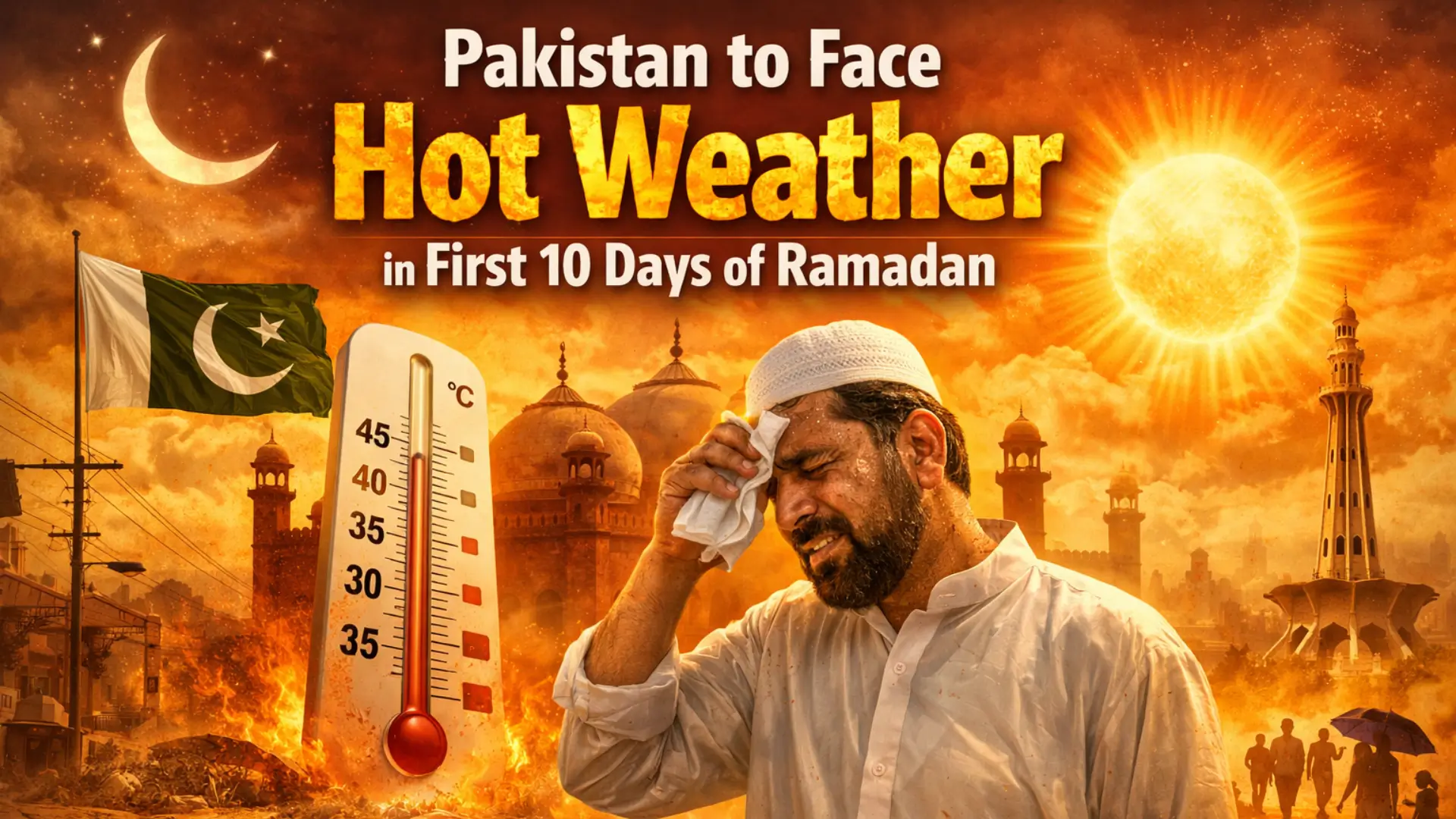

Hot Weather in First 10 Days of Ramadan. As Ramadan approaches, weather experts have warned that most parts of Pakistan are likely to experience hot and dry weather, especially during the early days of fasting. According to officials, the beginning of Ramadan will bring warm daytime temperatures and limited chances of rainfall across the country.
The forecast has raised concerns among citizens, particularly those living in southern regions where temperatures are expected to rise significantly compared to northern and central areas.
PMD Issues Weather Advisory for Ramadan
The Pakistan Meteorological Department (PMD) has issued a weather advisory stating that the first 10 days of Ramadan will likely remain dry and warmer than usual in most regions.
PMD Deputy Director Irfan Virk shared that rainfall chances are very low during the early part of the holy month. According to the department’s projections, daytime conditions will remain largely dry, with clear skies dominating most parts of the country.
This outlook indicates that fasting hours may feel longer and more challenging due to the warm daytime temperatures.

Weather Conditions in Major Cities
Weather experts have provided early forecasts for major cities across Pakistan. According to initial projections, cities like Lahore and Islamabad are expected to experience relatively moderate temperatures, especially at the start of Ramadan.
Temperatures in these northern and central cities are likely to remain below 30°C during the early days, making conditions more manageable for those observing fasts.
However, authorities have warned that the situation may vary significantly across regions, with southern areas facing much warmer conditions.
Southern Pakistan Likely to Experience Higher Temperatures
In contrast to the northern regions, southern parts of the country are expected to face hotter weather during the first phase of Ramadan.

Parts of Sindh and southern Punjab are forecast to see temperatures reaching up to 35°C, which could make fasting more difficult, particularly during longer daylight hours.
Experts say that higher temperatures combined with dry weather could increase the risk of dehydration and fatigue, especially for outdoor workers and elderly individuals.
Slight Chance of Rainfall in Karachi
While most regions are expected to remain dry, there is a slight possibility of rainfall in Karachi, Pakistan’s southern port city.
According to senior meteorological officials, a new wave of westerly winds may enter the country, potentially bringing light showers to the coastal areas. However, experts have cautioned that any rainfall is unlikely to significantly alter the overall warm and dry weather pattern.

Even if rain occurs, it is expected to be brief and localized rather than widespread.
Karachi Temperature Forecast During Ramadan
For residents of Karachi, temperatures during the first 20 days of Ramadan are projected to range between 32°C and 34°C. Despite the possibility of occasional showers, weather conditions are expected to remain moderately warm and humid.
Meteorologists believe that sea breezes may help slightly balance the heat, preventing extreme temperature spikes. However, fasting during daytime hours may still feel challenging due to humidity levels.
Hotter Weather Expected in the Last 10 Days
Looking ahead, forecasters have warned that temperatures are likely to rise further during the final 10 days of Ramadan. This means the end of the holy month could bring stronger heat waves and more intense daytime conditions.

Weather experts believe that the transition from moderate warmth to hotter conditions will be gradual but noticeable, particularly in southern and interior regions.
Authorities are closely monitoring weather developments and may issue updated advisories as Ramadan progresses.
Authorities Urge Public to Take Precautions
With warmer weather expected, authorities have advised the public to take necessary precautions during fasting hours. Health experts recommend staying hydrated during non-fasting hours, avoiding direct sunlight, and limiting outdoor activities during peak heat.
Special precautions are being advised for:

- Elderly individuals
- Children
- Outdoor laborers
- People with medical conditions
Experts also suggest consuming balanced meals at sehri and iftar to maintain energy levels throughout the day.
Impact on Daily Life During Ramadan
The expected warm weather may impact daily routines during Ramadan, particularly in regions where temperatures exceed 35°C. People may adjust their work schedules, outdoor activities, and travel plans to cope with the heat.
Markets and commercial areas are also likely to become more active after sunset, as people avoid daytime exposure to high temperatures.
Additionally, religious gatherings and outdoor iftar events may require extra arrangements such as cooling systems and shaded areas.
Conclusion
The early weather forecast for Ramadan suggests that Pakistan will experience predominantly hot and dry conditions during the first 10 days of the holy month. While northern cities may enjoy relatively moderate temperatures, southern regions are expected to face significantly warmer weather.