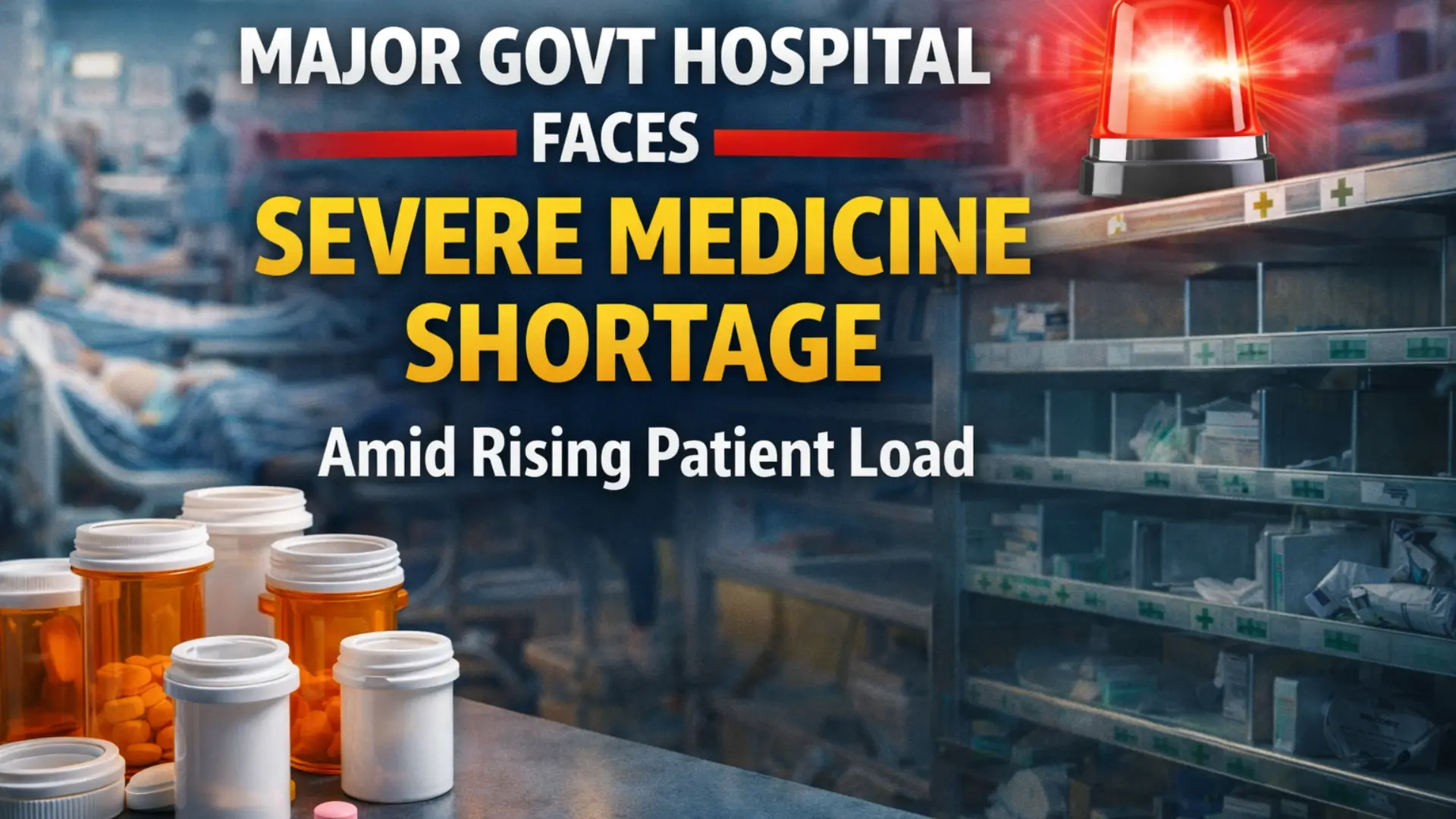

Major Govt Hospital Faces Severe Medicine. A major public healthcare facility, Benazir Bhutto General Hospital, is currently facing a serious shortage of essential medicines due to financial constraints, increasing patient inflow, and large unpaid dues to pharmaceutical suppliers. The situation has raised concerns among healthcare professionals, patients, and policymakers, as the hospital continues to serve a massive population with limited resources.
Officials warn that without immediate financial support, the ongoing crisis could severely impact healthcare services and patient outcomes.
Financial Crisis Behind the Medicine Shortage
According to official sources, the hospital is struggling with outstanding dues of Rs. 330 million owed to medicine suppliers. Meanwhile, the total medicine budget allocated for the ongoing fiscal year stands at Rs. 380 million, creating a major financial imbalance.
If the hospital clears the pending dues from the current budget, it will be left with only Rs. 50 million for fresh medicine purchases, an amount considered highly insufficient to meet the needs of thousands of patients who rely on the facility daily.
Hospital administrators say this financial shortfall is one of the key reasons behind the current medicine shortage.

Previous Fiscal Year’s Overspending Worsened the Situation
The crisis did not emerge overnight. During the previous fiscal year 2025–26, the hospital was allocated Rs. 400 million for medicines, but actual spending nearly doubled to around Rs. 800 million due to an unprecedented surge in patient numbers.
Out of the resulting Rs. 400 million deficit, only Rs. 70 million was adjusted from another budget head, leaving a remaining Rs. 330 million unpaid to pharmaceutical vendors. These unpaid liabilities have now carried forward into the current fiscal year, further straining the hospital’s financial position.
Healthcare experts say such recurring budget mismatches highlight deeper structural challenges in public healthcare funding.
Budget Approval Far Below Required Amount
For the current fiscal year 2026–27, hospital authorities had requested Rs. 1.25 billion to ensure an uninterrupted supply of medicines and maintain service quality. However, the Specialized Healthcare and Medical Education Department approved and released only Rs. 380 million, which is significantly lower than the requested amount.

Hospital officials have expressed concerns that the approved budget is not even enough to cover past dues, let alone sustain medicine supplies for the entire year.
This mismatch between demand and allocated funds has intensified the medicine shortage, putting additional pressure on already overstretched medical staff.
Growing Demand Due to Rising Patient Influx
One of the main reasons behind the excessive spending and shortages is the rapidly increasing number of patients visiting the hospital. As a major government healthcare facility, the hospital caters to a diverse and large population base.
In addition to local patients, people from Rawalpindi Division, Azad Kashmir, Khyber Pakhtunkhwa, and Islamabad also depend heavily on the hospital for affordable treatment.

The rising patient load has significantly increased medicine consumption, making it difficult for the hospital to manage its budget effectively.
Estimated Additional Funds Required
Hospital officials have warned that even after settling outstanding vendor payments, the facility would still require an additional Rs. 800 million to Rs. 1 billion to adequately meet the needs of indoor patients, emergency cases, and outpatient department (OPD) visitors.
Without these funds, the hospital may struggle to maintain consistent availability of essential drugs, including life-saving medicines used in emergency care and chronic disease treatment.
Healthcare professionals fear that prolonged shortages could lead to treatment delays, increased patient suffering, and additional financial burdens on low-income families.

Impact on Patients and Healthcare Services
The medicine shortage has already started affecting patients, many of whom rely entirely on government hospitals for free or subsidized treatment. In some cases, patients are being asked to purchase medicines from private pharmacies, which can be costly for economically disadvantaged families.
Doctors and hospital staff are also facing immense pressure as they try to manage patient care with limited medical supplies. The shortage not only impacts treatment quality but also adds emotional and professional stress on healthcare workers.
Public health experts warn that if the situation continues, it could undermine trust in public healthcare institutions.
Calls for Immediate Government Intervention
Healthcare professionals and administrative officials have urged authorities to take urgent steps to address the financial crisis. They stress the need for immediate release of additional funds, improved budget planning, and long-term reforms in public healthcare financing.
Experts believe that sustainable funding models and better resource management are essential to prevent similar crises in the future.
They also emphasize the importance of strengthening primary healthcare systems to reduce the burden on major tertiary hospitals.
Conclusion
The ongoing medicine shortage at Benazir Bhutto General Hospital highlights the serious challenges facing Pakistan’s public healthcare system. With rising patient numbers, insufficient funding, and mounting vendor dues, the hospital is struggling to maintain essential medical services.