
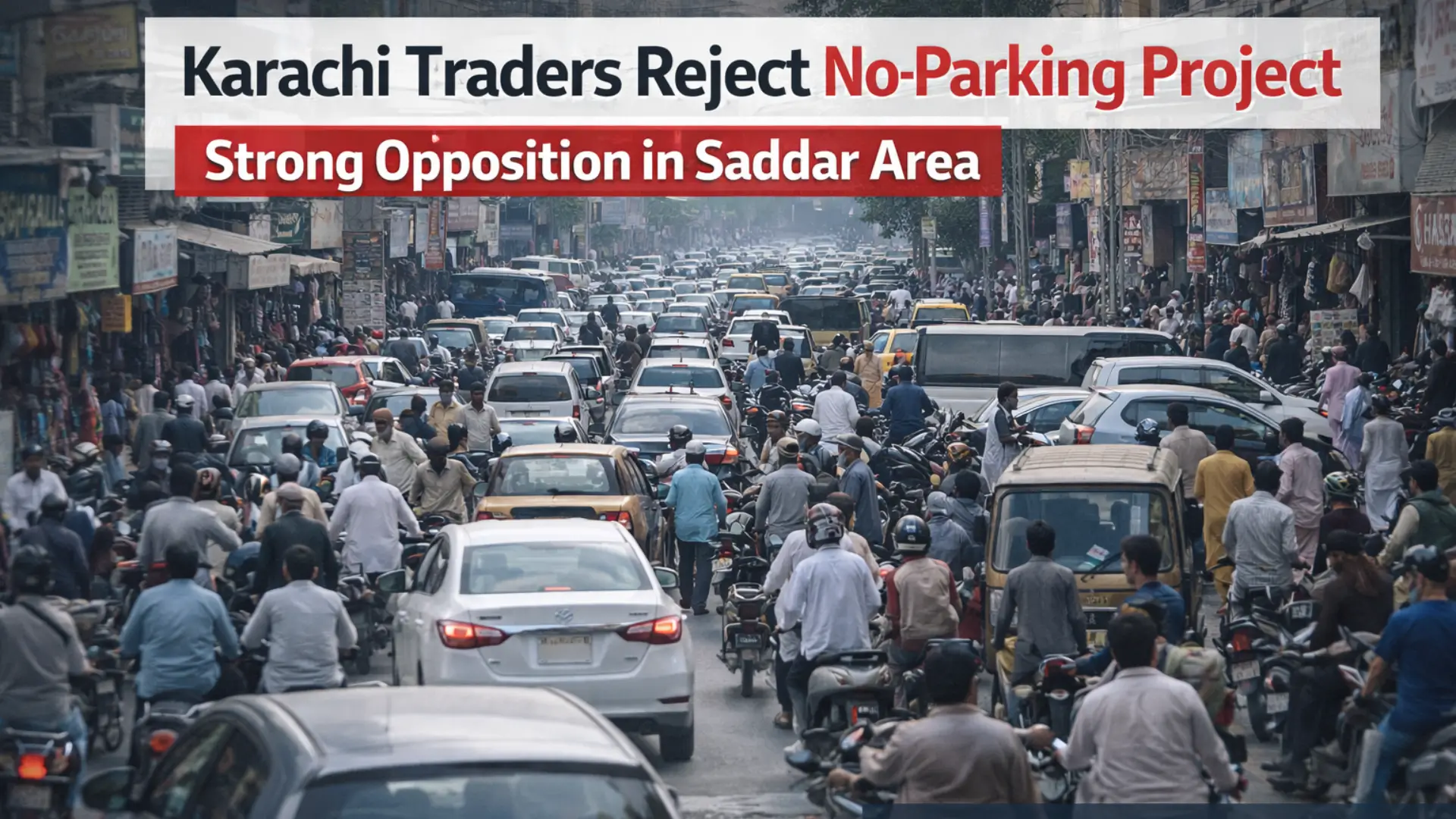

Reject No-Parking Project in Saddar. The business community in Karachi has strongly rejected the Sindh government’s proposed “no-parking” pilot project in Saddar, expressing serious concerns over its potential impact on commercial activity. Traders argue that the decision, if implemented without proper consultation and alternative arrangements, could significantly harm businesses in one of the city’s busiest commercial hubs.
The proposal aims to regulate traffic congestion in Saddar by introducing designated no-parking zones. However, shopkeepers and market representatives believe that the move could reduce customer access and negatively affect daily sales.
Sindh Government Proposed No-Parking Plan
According to market representatives, the Deputy Commissioner has informed traders that the provincial government is planning to introduce no-parking zones in Saddar, including Zaibunnisa Street. The initiative is reportedly part of a broader strategy to improve traffic flow and reduce congestion in the area.
Under the proposed project, cars and motorcycles will not be allowed to park in specified zones. However, authorities have indicated that pick-and-drop services will remain permitted, allowing vehicles to briefly stop for passenger drop-offs.
Officials believe that restricting parking will help clear roadways, minimize traffic jams, and improve the overall flow of vehicles in Saddar, which is known for its heavy traffic and crowded streets.

Traders Express Strong Opposition
Despite the government’s intentions, traders in Saddar have openly opposed the project. Rizwan Irfan, President of the Saddar Electronic Market, voiced concerns about the impact of the no-parking policy on businesses.
He stated that declaring key commercial roads such as Abdullah Haroon Road as no-parking zones without first arranging alternative parking facilities would create serious difficulties for customers.
According to Irfan, customers may avoid visiting Saddar if they are forced to park their vehicles far away from shopping areas. This, he warned, could result in a significant drop in foot traffic and overall business activity.
Concerns Over Heavy Fines for Shopkeepers
Another major concern raised by traders is the possibility of imposing a fine of Rs. 50,000 on shopkeepers if makeshift stalls are found outside their shops.

Authorities are reportedly considering strict penalties to discourage encroachments and unauthorized roadside setups. However, traders argue that shopkeepers should not be held responsible for encroachers who operate independently.
Rizwan Irfan emphasized that shop owners cannot control individuals who set up stalls without permission. He urged the government to take direct action against encroachers rather than penalizing legitimate business owners.
Demand for Alternative Parking Facilities
One of the primary demands of the trader community is the provision of proper alternative parking facilities before implementing the no-parking policy.
Traders have suggested that the government should first construct designated parking areas to accommodate customers’ vehicles. Without such arrangements, they believe the no-parking project could severely disrupt commercial activities in Saddar.

As a potential solution, Rizwan Irfan proposed the construction of an underground parking facility beneath Jehangir Park. He stated that such a project would provide long-term relief from parking issues while supporting business growth in the area.
Impact on Saddar Commercial Activity
Saddar is one of Karachi’s oldest and busiest commercial districts, attracting thousands of shoppers daily. From electronics markets to clothing outlets and food spots, the area plays a vital role in the city’s retail economy.
Traders argue that limiting parking access without proper planning could discourage customers, particularly families and out-of-town visitors who rely on personal vehicles for shopping.
Business representatives warn that reduced accessibility could shift customers to shopping malls or other commercial centers where parking facilities are more convenient.

Call for Consultation with Stakeholders
The trader community has called on the Sindh government and the Mayor of Karachi to reconsider the proposed no-parking project. They have emphasized the importance of consulting stakeholders before implementing major policy decisions that directly affect businesses.
According to traders, collaborative planning between authorities and market representatives could lead to practical solutions that address traffic concerns without damaging commercial interests.
They stressed that decisions related to urban planning and traffic management should be made after thorough discussion with those who operate in the affected areas.
Government Objective Behind the Project
While traders have expressed concerns, government officials view the no-parking initiative as a step toward improving traffic management in congested areas of Karachi.

Saddar has long struggled with traffic bottlenecks, illegal parking, and encroachments, which contribute to daily congestion. Authorities believe that stricter parking regulations could enhance mobility and create a more organized urban environment.
However, the success of the project will depend on effective implementation, public cooperation, and the availability of alternative arrangements.
Conclusion
The rejection of the Saddar no-parking project by Karachi traders highlights the growing tension between urban management reforms and business interests. While the Sindh government aims to improve traffic flow and reduce congestion, traders fear that the move could negatively impact commercial activity in one of the city’s busiest markets.