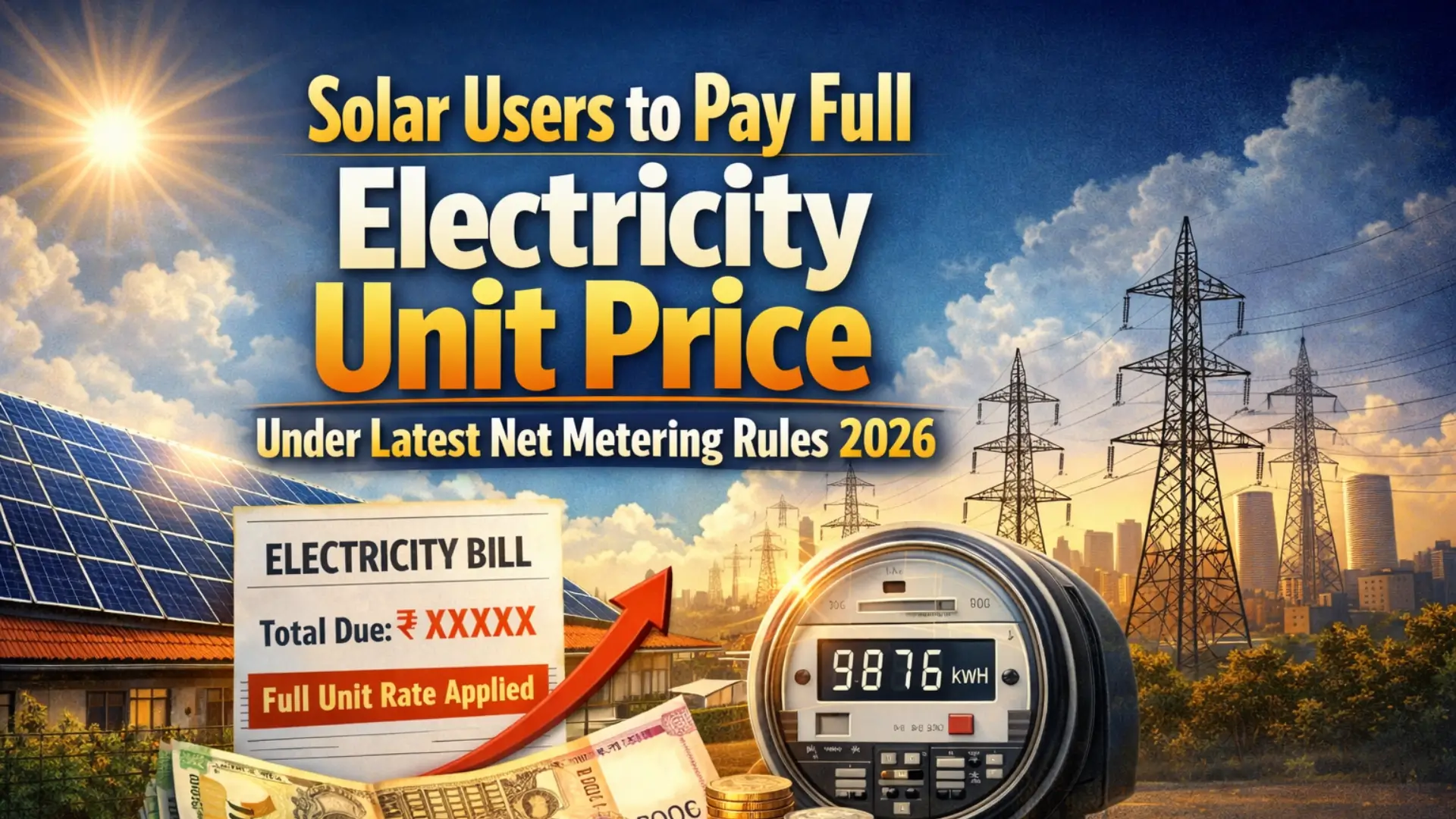

Solar Users to Pay Full Electricity Unit Price. The National Electric Power Regulatory Authority (NEPRA) has officially notified the Net Metering and Prosumer Regulations 2026, introducing major changes to Pakistan’s solar energy framework. The new rules mark the end of the long-standing unit-for-unit net metering system, significantly impacting current and future solar power users across the country.
Under the revised policy, solar consumers will now be required to pay the full applicable electricity tariff for power consumed from the national grid, while surplus electricity exported to the grid will be purchased at a much lower rate.
End of Unit-for-Unit Net Metering System
One of the most significant changes under the Net Metering Regulations 2026 is the abolition of the unit-for-unit electricity adjustment mechanism. Previously, solar net metering consumers could offset the electricity they exported to the grid against the electricity they imported on a one-to-one basis.
Under the new framework, this system has been replaced with a net billing mechanism, where electricity supplied to and consumed from the grid will be calculated separately at the end of each billing cycle.
Revised Buyback Rate for Solar Power
Currently, the buyback rate for electricity exported by solar net metering consumers stands at Rs. 25.9 per unit. However, under the newly proposed regulations, this rate may be reduced to around Rs. 11 per unit, based on the National Average Energy Price.

This reduction has raised concerns among solar users, as it significantly lowers the financial return on surplus electricity generated through rooftop solar systems.
Full Retail Tariff to Be Charged on Grid Electricity
According to NEPRA’s notification, distribution companies (Discos) will charge solar consumers the full applicable retail tariff for electricity drawn from the grid. This tariff may reach as high as Rs. 50 per unit, depending on consumer category and prevailing rates.
At the same time, Discos will purchase excess electricity generated by solar consumers at approximately Rs. 11 per unit, creating a wide gap between buying and selling prices.
Protection for Existing Net Metering Consumers
NEPRA has clarified that the new net metering policy will not apply to existing consumers during the validity of their current contracts. Solar users who already have net metering agreements will continue under the old framework until their contracts expire.

However, distribution companies have been authorized to either terminate contracts or shift consumers to the new policy framework once the existing contract period ends.
Introduction of Net Billing Mechanism
Under the Net Metering Regulations 2026, electricity generated through distributed generation facilities using solar, wind, or biogas up to 1 MW capacity will now be settled through net billing instead of net metering.
Billing will be carried out at the end of each 30-day billing cycle, based on:
- Actual electricity consumed from the grid
- Actual electricity exported to the grid
Payments for surplus electricity will be made separately, moving away from the one-to-one unit compensation model.

National Average Energy Price for Exported Electricity
The regulations state that electricity exported to the national grid by net metering consumers will be purchased at the National Average Energy Price, while electricity consumed will be billed at the prevailing applicable tariff.
This change is aimed at better aligning consumer-level power generation with the national tariff structure and ensuring greater transparency in billing and settlements.
Inclusion of Biogas and Other Prosumers
The revised framework also brings biogas-based prosumers under the same regulatory structure as solar and wind energy producers. This move standardizes distributed generation across different renewable energy sources.
NEPRA has defined eligible consumers to include:

- Residential
- Commercial
- Industrial
- Agricultural
- General services consumers
All eligible consumers must be connected at 400V or 11kV, subject to approval and interconnection with the relevant distribution company.
Suspension of Net Metering Regulations 2015
With the enforcement of the Prosumer Regulations 2026, the Net Metering Regulations 2015 have been officially suspended. NEPRA stated that the revised rules are designed to:
- Standardize distributed generation
- Improve transparency
- Align rooftop power generation with national energy planning
The authority believes these changes will help stabilize the power sector while addressing financial imbalances.
Contract Duration Limited to Five Years
Under the new regulations, net metering contracts will now be limited to a period of five years. Upon expiry, contracts may be renewed for an additional five years, subject to updated terms and regulatory approval.

This provision gives NEPRA greater flexibility to revise policies in line with market conditions and energy sector requirements.
Enhanced Powers Granted to NEPRA
The new framework grants NEPRA special regulatory powers, including the authority to:
- Revise electricity purchase rates during contract periods
- Issue binding operational directions
- Demand operational and performance data
- Impose penalties for non-compliance
- Relax or modify provisions when deemed necessary
These powers aim to strengthen regulatory oversight and ensure compliance with national energy objectives.
Conclusion
The introduction of the Net Metering and Prosumer Regulations 2026 marks a major shift in Pakistan’s renewable energy landscape. While the policy aims to improve transparency, standardization, and grid stability, the reduced buyback rate and full retail tariffs may significantly impact the financial viability of rooftop solar systems for future consumers.