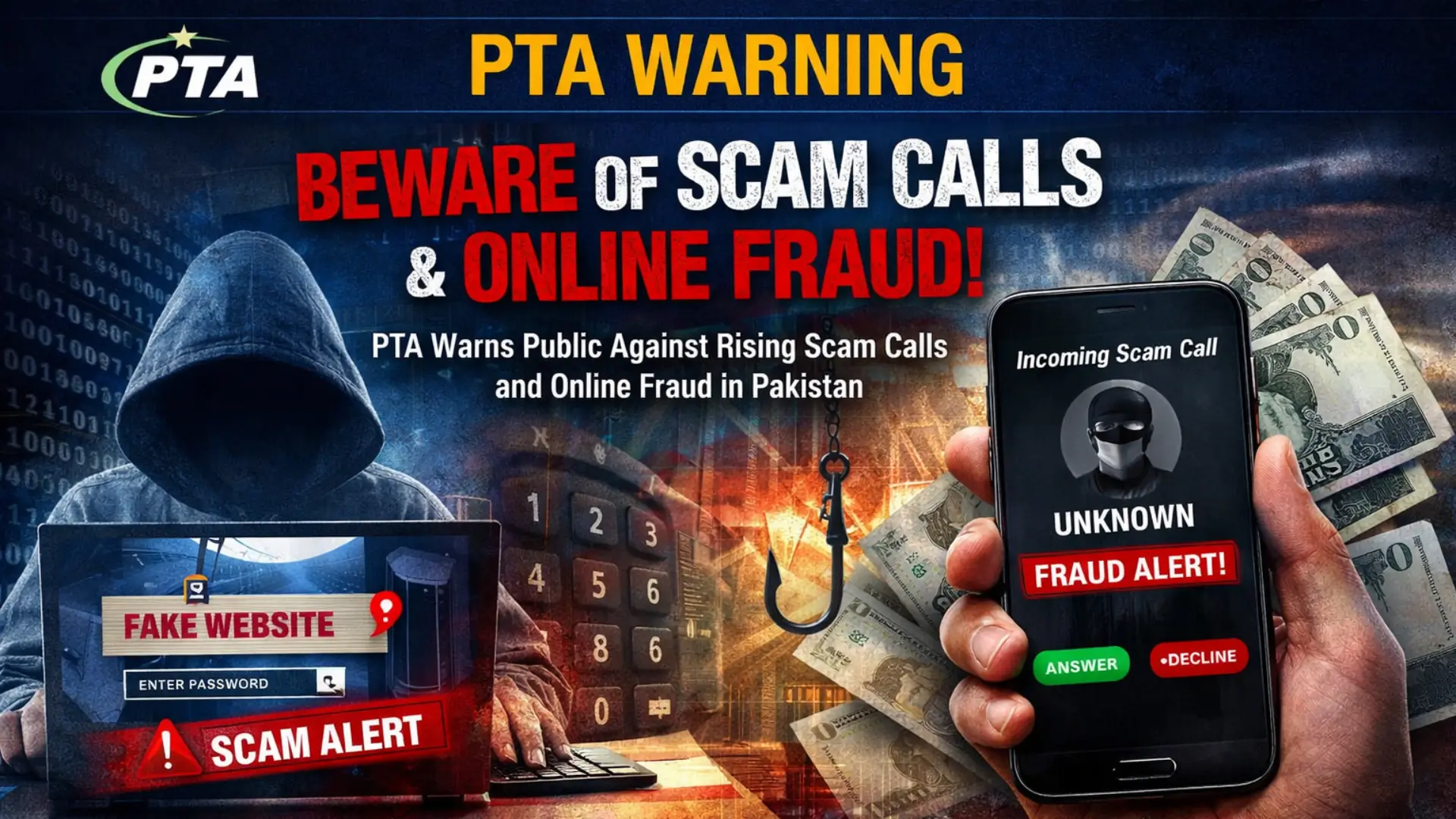

PTA Warns Public Against Rising Scam Calls. Online fraud and scam calls are increasing rapidly across Pakistan, prompting the Pakistan Telecommunication Authority (PTA) to issue a fresh public warning. The authority has urged citizens to stay alert and avoid sharing personal or financial information with unknown callers, suspicious messages, or unverified online links. With scammers using more advanced and convincing methods, digital safety has become more important than ever.
This advisory highlights the growing threat of telecom and online scams and explains how people can protect themselves from financial loss and identity misuse.
Increase in Scam Calls and Digital Fraud Cases
According to PTA, there has been a noticeable rise in fraud attempts through phone calls, SMS messages, and online platforms. Scammers are actively targeting mobile users by pretending to be officials, company representatives, or prize distributors. These fake callers try to build trust quickly and pressure victims into sharing sensitive information.
Authorities say that many victims fall into these traps due to urgency tactics — such as limited-time prize claims, account blocking threats, or emergency messages. Once personal data is shared, it is often misused for financial theft or identity fraud.
Common Tactics Used by Scammers
Fraudsters are constantly changing their techniques to appear genuine and convincing. PTA has highlighted several common scam methods currently being used:

- Fake prize winning calls or lottery announcements
- Messages claiming account verification is required
- Calls pretending to be from banks or government offices
- Links sent through SMS or WhatsApp that install malware
- Requests for OTP codes and PIN numbers
- Threat calls about SIM or bank account suspension
These tactics are designed to create panic or excitement so victims respond without verifying facts.
How Victims Are Tricked Into Sharing Information
Most scams follow a similar psychological pattern. The caller first gains attention with good news or urgent warnings. Then they request confidential details such as:
- Bank account numbers
- CNIC details
- Mobile banking credentials
- One-Time Passwords (OTP)
- Card numbers and PIN codes
PTA clearly states that legitimate institutions do not ask for such details through random calls or messages. Sharing this information can result in direct financial theft
PTA’s Official Safety Advice for Citizens
The telecom regulator has issued clear safety instructions for the general public to reduce fraud risks. Citizens are strongly advised to follow these guidelines:

- Never share personal or banking details with unknown callers
- Do not click suspicious links received via SMS or chat apps
- Verify prize or reward claims through official sources
- Ignore calls asking for urgent payments or codes
- Block and report suspicious numbers immediately
- Use official apps and websites only
Public awareness and cautious behavior are considered the first line of defense against digital fraud.
Reporting Scam Calls and Fraud Attempts
PTA has encouraged citizens to report scam calls and fraud attempts as quickly as possible. Fast reporting helps authorities take action and prevent further victims.
Fraud complaints can be submitted through:
- PTA official complaint portal
- PTA CMS mobile application
For specialized cases, different authorities handle different fraud categories.

Where to Report Different Types of Fraud
Citizens should contact the correct department depending on the type of scam:
Cybercrime & Online Fraud:
Report to the Federal Investigation Agency (FIA) cybercrime wing through helpline 1799.
Banking & Financial Fraud:
Contact the State Bank of Pakistan helpline at 111-727-273.
Early reporting increases the chances of limiting financial damage and tracing fraud networks.

Why Early Reporting Is Important
Many victims delay reporting fraud due to embarrassment or confusion. However, authorities stress that quick reporting can:
- Freeze suspicious transactions
- Block fraudulent accounts
- Trace scam networks
- Protect other potential victims
- Improve law enforcement response
Digital fraud spreads faster when incidents go unreported. Timely complaints help build stronger protection systems.
Growing Need for Digital Awareness
With more people using online banking, mobile wallets, and digital services, scammers are finding new opportunities. Experts say digital literacy and awareness must grow alongside technology usage.
Families are encouraged to educate elderly members and young users about scam warning signs. Simple habits — like verifying callers and avoiding unknown links — can prevent major losses.

Educational campaigns, social media alerts, and telecom advisories are playing a key role in spreading awareness, but personal responsibility remains essential.
Role of Telecom and Financial Institutions
Telecom operators and banks are also strengthening their security systems. Many now provide:
- Fraud alert messages
- Secure transaction verification
- Customer awareness notifications
- In-app reporting tools
However, even the best security systems cannot protect users who willingly share confidential data. That is why PTA continues to emphasize user caution.
Conclusion
Scam calls and online fraud are rising in Pakistan, making public awareness essential. PTA advises citizens to stay cautious, protect personal data, and report suspicious activity quickly. Avoid sharing banking details or clicking unknown links. Early reporting and smart digital behavior are the strongest defenses against financial and identity fraud.