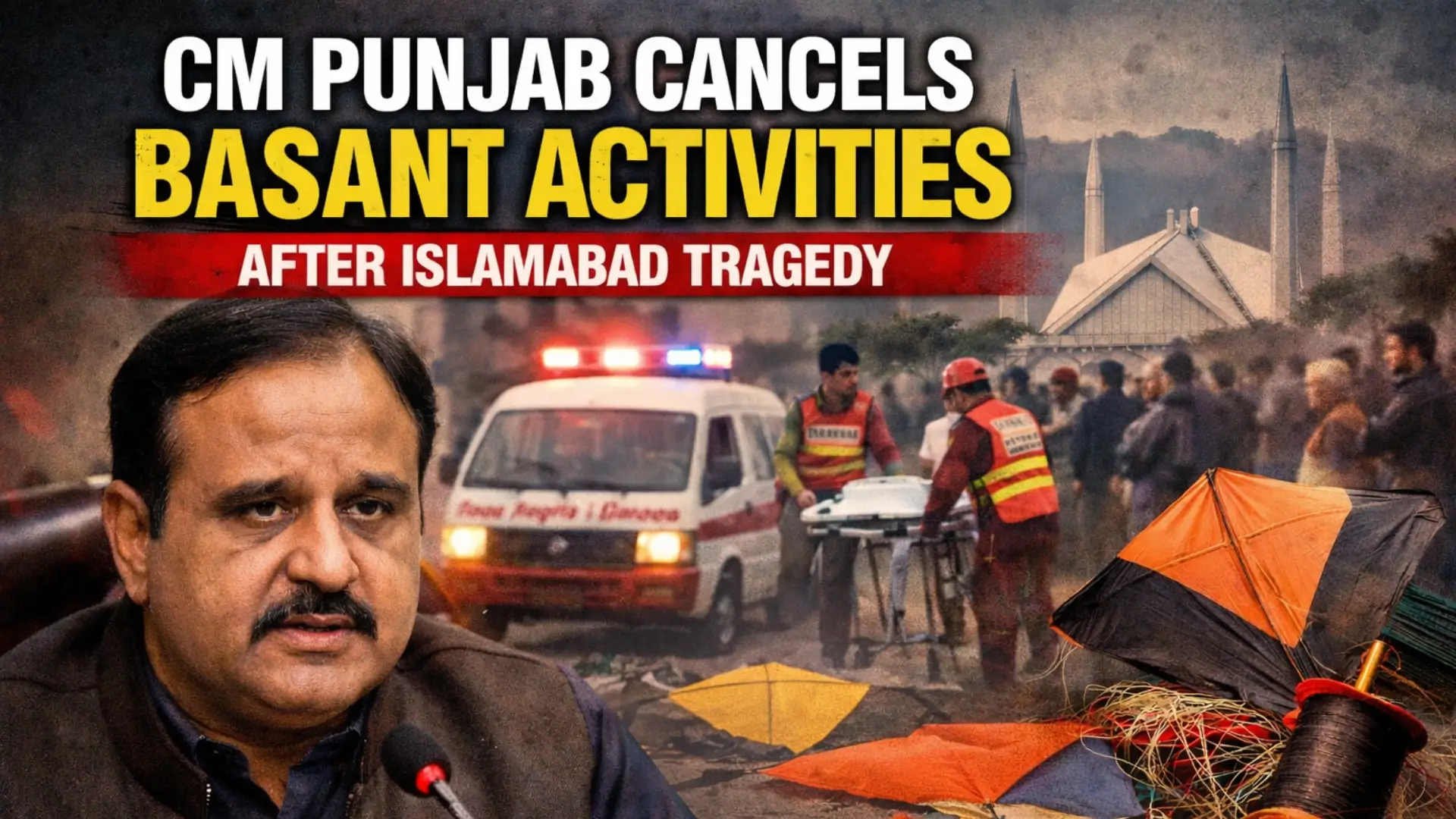
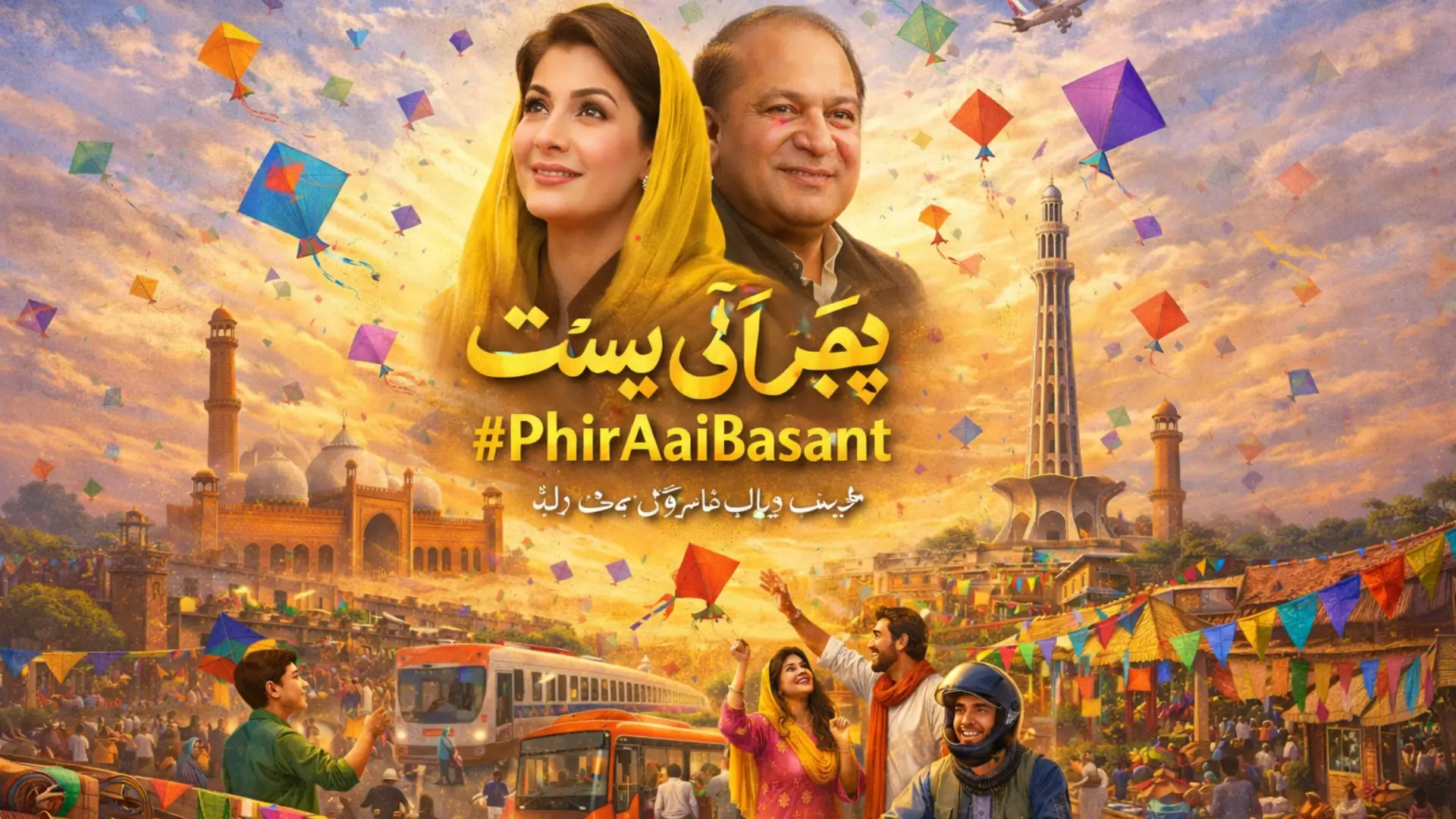

The colorful spirit of Basant has officially returned to Punjab with a renewed cultural identity, as the Government of Punjab released the first-ever official Basant anthem titled #PhirAaiBasant. This historic move marks the formal recognition of Basant as a cultural tradition of the province, under the leadership of Chief Minister Maryam Nawaz.
For years, Basant remained a sensitive and debated topic in Punjab due to safety concerns and regulatory challenges. However, with the launch of this anthem, the provincial government has sent a strong message that cultural heritage can be preserved responsibly through regulation, awareness, and structured planning. The anthem does not only celebrate spring but also reflects a broader cultural vision rooted in Punjab’s history.
Basant and Punjab Cultural Identity
Basant has long been associated with the arrival of spring in Punjab. Traditionally celebrated with kite flying, music, colorful clothing, and community gatherings, the festival represents joy, renewal, and unity. For generations, families gathered on rooftops, children flew kites, and the skies turned vibrant with colors.
The release of the Basant anthem symbolizes a shift in how cultural traditions are approached by the state. Instead of outright bans or informal celebrations, the government has chosen a regulated and inclusive model. This approach acknowledges that Basant is not just a festival but a part of Punjab’s shared memory and cultural expression.
A Vision Linked to Nawaz Sharif’s Cultural Policy
The revival and recognition of Basant align closely with a cultural vision historically associated with former Prime Minister Nawaz Sharif. During earlier tenures, Basant was promoted as a symbol of Punjab’s rich heritage, tourism potential, and social harmony.
By officially recognizing Basant through an anthem, the current Punjab government has reinforced that long-standing vision. The anthem serves as a cultural statement, emphasizing continuity, tradition, and the importance of preserving regional customs within a modern governance framework.
From Celebration to Regulation
One of the most significant aspects of this initiative is the structured regulatory framework introduced alongside the anthem. The Punjab government has made it clear that cultural celebration must go hand in hand with public safety and order.

To address past concerns, Roof NOCs (No Objection Certificates) have been made mandatory for kite flying. This ensures that only approved rooftops meeting safety standards are used during the festival. It also allows authorities to monitor and manage large gatherings more effectively.
Similarly, the sale and purchase of kites and string are strictly regulated. Only government-authorised dealers are permitted to sell kite-flying materials. This measure aims to control the quality of materials used and prevent the circulation of dangerous chemical or metallic strings that previously caused injuries and fatalities.
Aviation Safety Measures Near Lahore Airport
Public safety has been a central focus of the Basant revival plan. For aviation safety, kite flying has been strictly prohibited in areas surrounding Lahore Airport. This decision addresses a critical risk area that could affect flight operations and passenger safety.

Clear boundaries and enforcement zones have been established to ensure that celebrations do not interfere with air traffic. This move reflects a balanced approach where cultural freedom does not compromise national or international safety standards.
Road Safety and Motorcycle Regulations
In addition to aviation concerns, road safety has also been addressed. During previous Basant seasons, stray kite strings posed serious threats to motorcyclists and pedestrians. To reduce this risk, the Punjab government has mandated the use of safety wire (protective neck wire) for motorcycle riders during the festival days.
This requirement is aimed at minimizing injuries caused by sharp strings and encouraging safer commuting practices. Public awareness campaigns have also been launched to educate citizens about protective measures and responsible behavior during celebrations.

Free Public Transport to Reduce Congestion
To further support public safety and convenience, the Punjab government has announced free public transport services for three days: February 6, 7, and 8. This initiative is designed to reduce traffic congestion and discourage excessive use of motorcycles and private vehicles.
By encouraging citizens to use buses and other public transport options, the government aims to lower accident risks and ensure smoother mobility across major cities. This step also reflects an inclusive approach, allowing people from all economic backgrounds to participate in Basant celebrations without financial burden.
Cultural Celebration with Responsibility
The Punjab government has repeatedly emphasized that the purpose of these arrangements is not restriction but responsibility. The goal is to allow Basant to be celebrated in a way that respects life, law, and public order.

The official anthem #PhirAaiBasant plays a symbolic role in this transformation. It gives Basant a unified voice, promotes a positive narrative, and encourages citizens to embrace cultural pride within defined boundaries. Music, as a cultural tool, helps reconnect people with traditions while reinforcing the message of safety and unity.
Public Response and Cultural Impact
The release of the anthem has received significant attention on social media and among cultural circles. Many view it as a long-awaited recognition of Punjab’s heritage, while others appreciate the government’s cautious and structured approach.
Cultural experts believe that formal recognition, combined with regulation, can help revive tourism, promote local arts, and strengthen provincial identity. Basant, when celebrated responsibly, has the potential to become a cultural showcase rather than a public safety concern.
Model for Future Cultural Policies
The Basant initiative may also serve as a model for managing other cultural events across Pakistan. It demonstrates that heritage preservation does not require ignoring risks but addressing them through policy, enforcement, and public cooperation.
By blending tradition with governance, the Punjab government has opened a new chapter in cultural management. The anthem is not just a song; it is a policy statement reflecting balance, inclusion, and respect for history.
Conclusion
The release of #PhirAaiBasant marks a turning point for cultural expression in Punjab. By recognizing Basant within a regulated framework, the Punjab government has shown that tradition and safety can coexist. This initiative restores cultural pride while promoting responsibility, order, and shared celebration across the province.