
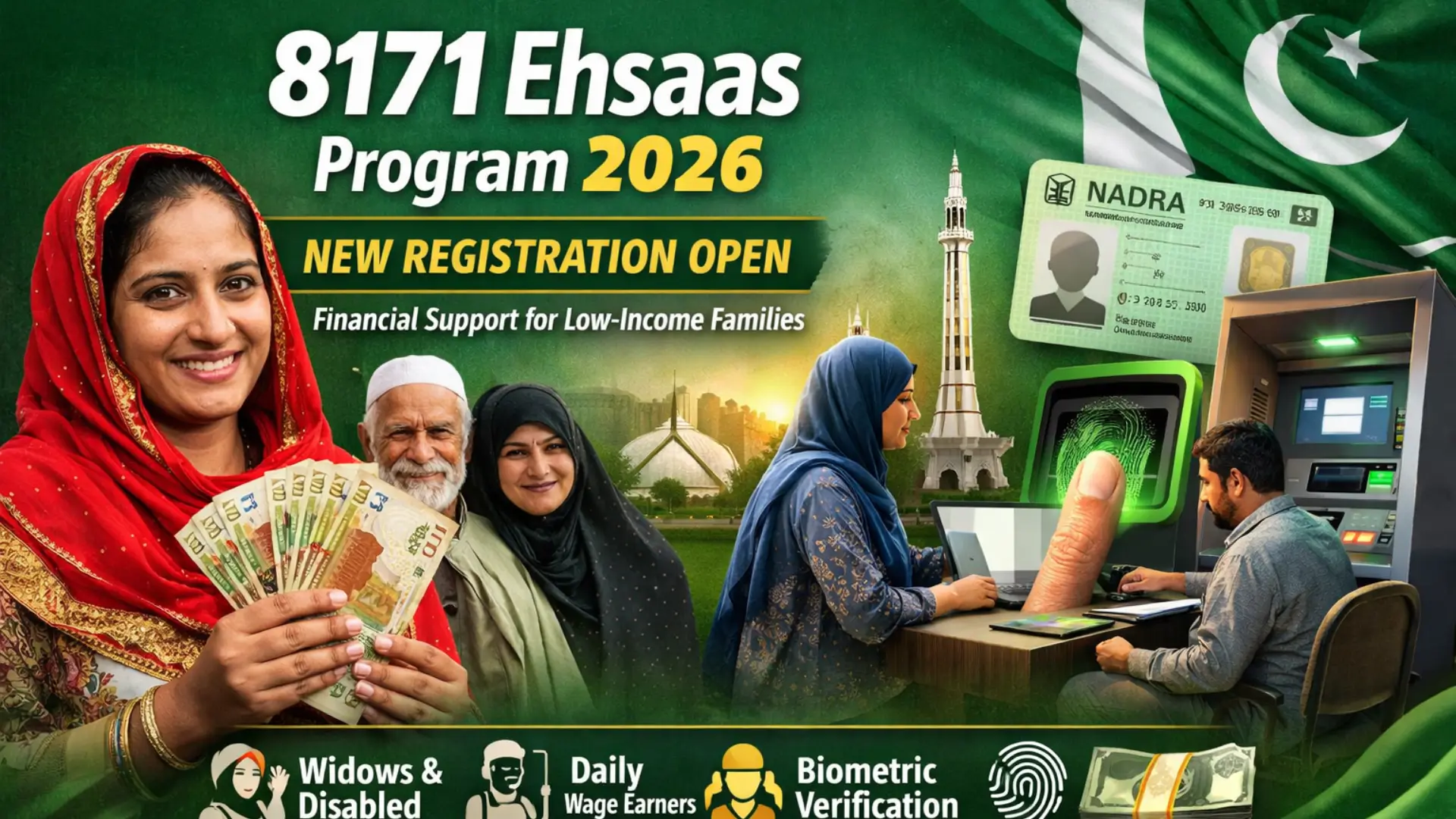

8171 Ehsaas Program 2026 New Registration. The Ehsaas Program is one of Pakistan’s largest social welfare initiatives. It is designed to provide direct financial assistance to families living below the poverty line. The program focuses on households facing serious financial hardship, especially women-led families, daily wage earners, unemployed individuals, widows, and persons with disabilities.
For 2026, the government has reopened the registration process to expand coverage and update beneficiary records. This step ensures that financial support reaches only genuinely deserving families while preventing duplication and misuse. The Ehsaas Program operates through a centralized database that verifies applicant information using official national records.
What Is the 8171 Ehsaas Program?
The 8171 Ehsaas Program is a government support system that provides regular cash assistance to vulnerable households. Instead of relying on charity models, the program follows a structured and respectful approach. Eligible citizens receive financial help as a right, not as a favor.
The program uses modern digital systems, biometric verification, and national databases to identify eligible families. This method increases transparency and reduces errors. The 8171 SMS service allows citizens to check eligibility easily, even without internet access.
Objectives of Ehsaas Program 2026
The main objective of the Ehsaas Program 2026 is to provide financial stability to low-income households. Rising inflation has made it difficult for many families to manage basic expenses such as food, healthcare, and education. This program helps reduce that pressure through consistent cash support.

Another key goal is social inclusion. The program aims to restore dignity by ensuring that assistance is delivered respectfully and fairly. Digital verification and biometric systems help eliminate favoritism and corruption. This approach builds trust between citizens and the government.
Who Can Apply for Ehsaas Program 2026?
Eligibility for the Ehsaas Program 2026 is determined through a data-driven system. Applicants must be citizens of Pakistan and hold a valid Computerized National Identity Card.
Household poverty is measured using the Poverty Means Test score. Only families falling below the approved threshold qualify. The program gives priority to widows, persons with disabilities, and households without a stable income source.
Certain groups are generally excluded. These include families with government employees, individuals owning significant assets, those with a history of foreign travel, or people holding foreign bank accounts. Citizens already receiving similar government assistance may also be marked ineligible to prevent overlapping benefits.

Registration Process for 8171 Ehsaas Program 2026
The registration process for the 8171 Ehsaas Program 2026 has been simplified to make it accessible for everyone. Applicants need to visit their nearest BISP or Ehsaas registration office to complete the National Socio-Economic Registry survey.
During the survey, applicants must provide accurate information about household members, income, and living conditions. This data is used to assess eligibility fairly.
In some regions, assisted digital or online registration options are also available through official government platforms. After registration, all data is verified through national databases. Applicants then receive status updates through an official SMS from 8171.
How to Check Eligibility Through 8171 SMS
Checking eligibility is very easy and does not require internet access. Applicants simply send their CNIC number, without dashes, to 8171 using their registered mobile phone.

Within a short time, an SMS response is received. The message clearly states whether the applicant is eligible, under review, or ineligible. This system saves time and reduces unnecessary visits to offices.
It also protects citizens from fraud. Only messages received from 8171 should be trusted. Any other number claiming to represent Ehsaas should be ignored.
Financial Assistance Under Ehsaas Program 2026
Financial assistance under the Ehsaas Program 2026 depends on household conditions and verification results. The amount may vary based on family size, poverty score, and the category under which the beneficiary is enrolled.
Payments are made through secure channels such as designated banks, official payment centers, or biometric-enabled systems. Beneficiaries receive SMS notifications with payment details and collection instructions.

This structured payment system ensures safety and reduces the risk of misuse.
Role of NADRA in Ehsaas Program
NADRA plays a crucial role in the Ehsaas Program. It verifies CNIC details and biometric information to ensure that assistance reaches the correct individuals.
Applicants with expired CNICs or incorrect personal data must resolve these issues at NADRA offices before completing registration. Biometric verification is mandatory during both enrollment and payment collection.
Accurate NADRA records help prevent identity fraud and duplication.
Transparency and Monitoring System
Transparency is a core principle of the Ehsaas Program 2026. The government uses automated checks, digital dashboards, and random verification processes to monitor registrations and payments.
Helplines and complaint systems are available for applicants facing issues. These mechanisms help resolve problems quickly and fairly.
Continuous monitoring reduces corruption and strengthens accountability. It also builds public confidence in the system.
Why Ehsaas Program 2026 Matters
The Ehsaas Program 2026 is more than just financial aid. It is a social protection system designed to support dignity, inclusion, and economic stability.
By using verified data and digital systems, the program ensures that public funds are used responsibly. It provides hope to families struggling with unemployment, disability, or rising living costs.
This initiative plays a vital role in strengthening Pakistan’s social safety net.
Conclusion
The 8171 Ehsaas Program 2026 is a major step toward supporting Pakistan’s most vulnerable families. Through transparent systems, fair eligibility checks, and easy access, the program ensures real help reaches deserving citizens. Timely registration and accurate information are key to b